
Waste Management Project within the Company
“Recycle & Upcycling” Project
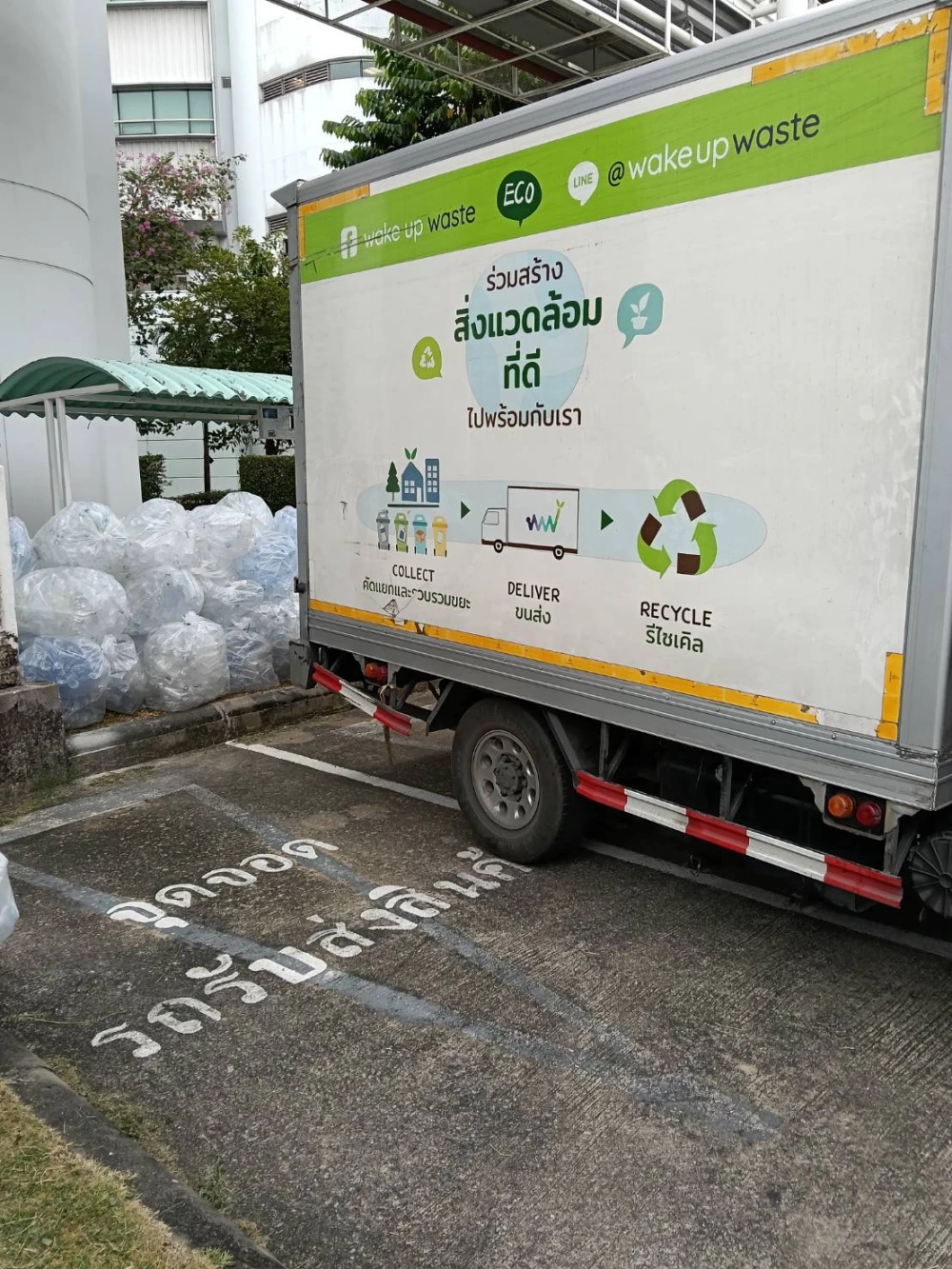
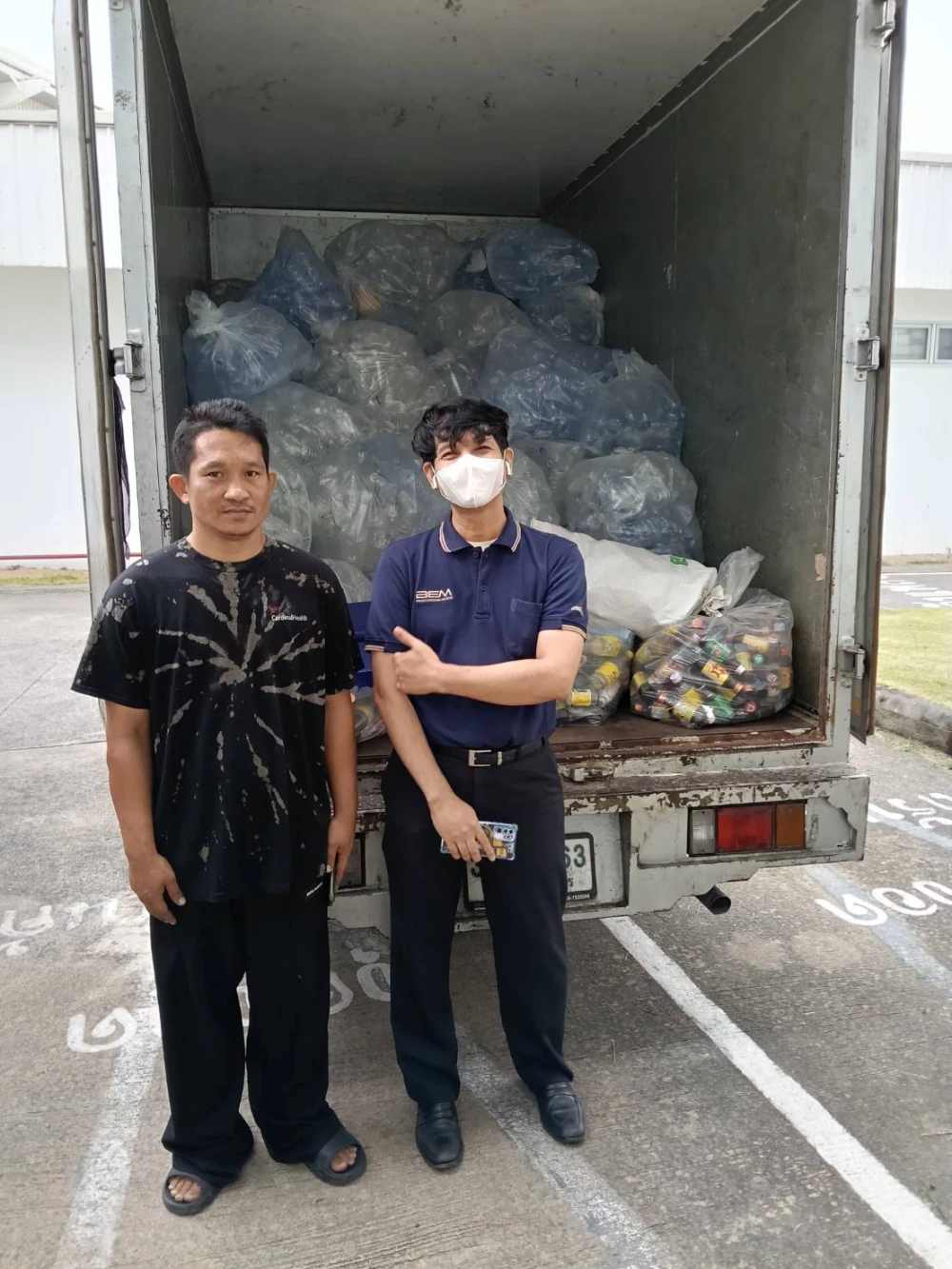
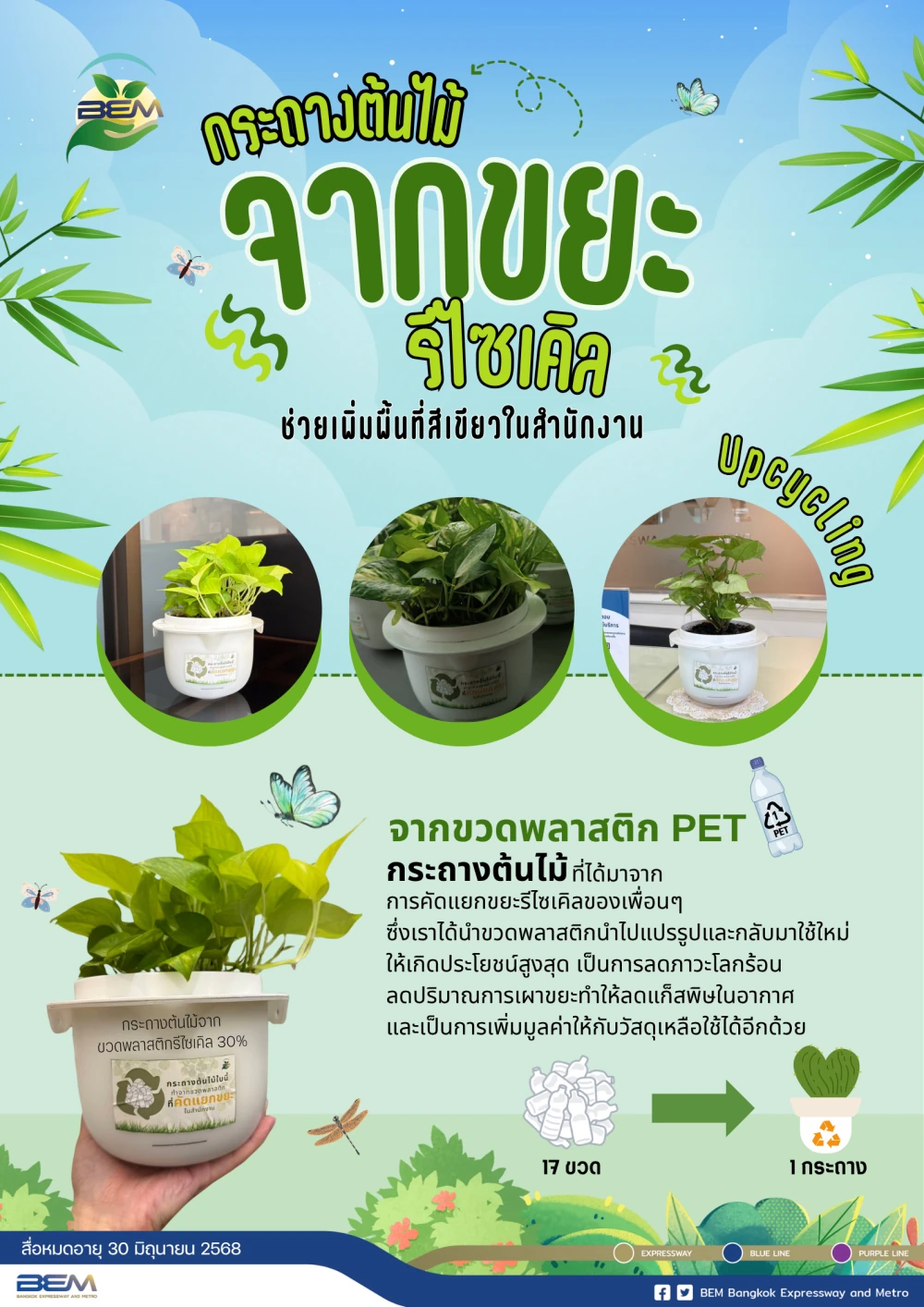
BEM carries out waste management activities across the Company’s various facilities through the “Recycle & Upcycling” project, spanning both offices and operating areas at the Rama 9 Administration Building and Si Rat Expressway Control Centre Building (CCB2). This initiative focuses on reducing waste at the source through proper waste segregation and recycling. These efforts are supported by the active cooperation of employees, building occupants, and partners across various activities and formats. The Company has collaborated with strategic partners to collect recyclable waste, through the “Wake Up Waste” and “SCGP Recycle” projects. These initiatives collect and circulate recyclable materials from the Rama 9 Administration Building and Si Rat Expressway Control Centre Building (CCB2), for proper waste management processes, using environmentally friendly electric vehicles for transportation. Furthermore, the Company can exchange the collected recyclable materials for environmentally friendly products to be used within the organization, such as recycled A4 paper, reusable fabric bags and plant pots.
In 2025, BEM collected a total of 6,911 kilograms of recyclable waste through the “Recycle & Upcycling” project. Under the “Wake Up Waste” project, the collected plastic bottles and aluminum cans were exchanged for 200 fabric bags and 16 plant pots. Additionally, through the “SCGP Recycle” project, paper and cardboard waste were exchanged for 4,000 sheets of A4 paper for internal use. This initiative successfully reduced GHG emissions by 15.0686 tCO2e.
| “Wake Up Waste” Project | From Plastic Bottles and Aluminum Cans (kg) | GHG Emissions Reduction (tons CO2e) |
|---|---|---|
| Exchanged for 200 fabric bags | 4,000 | 4.1240 |
| Exchanged for 16 recycled plant pots | 1,200 | 1.2372 |
| “SCGP Recycle” Project | From Paper Waste (kg) | GHG Emissions Reduction (tons CO2e) |
|---|---|---|
| Exchanged for 4,000 sheets of A4 paper | 1,711 | 9.7074 |
“Recycle & Upcycling” Project
| Recycled Waste (kg) | GHG Emissions Reduction (tons CO2e) |
|---|---|
| 6,911 | 15.0686 |
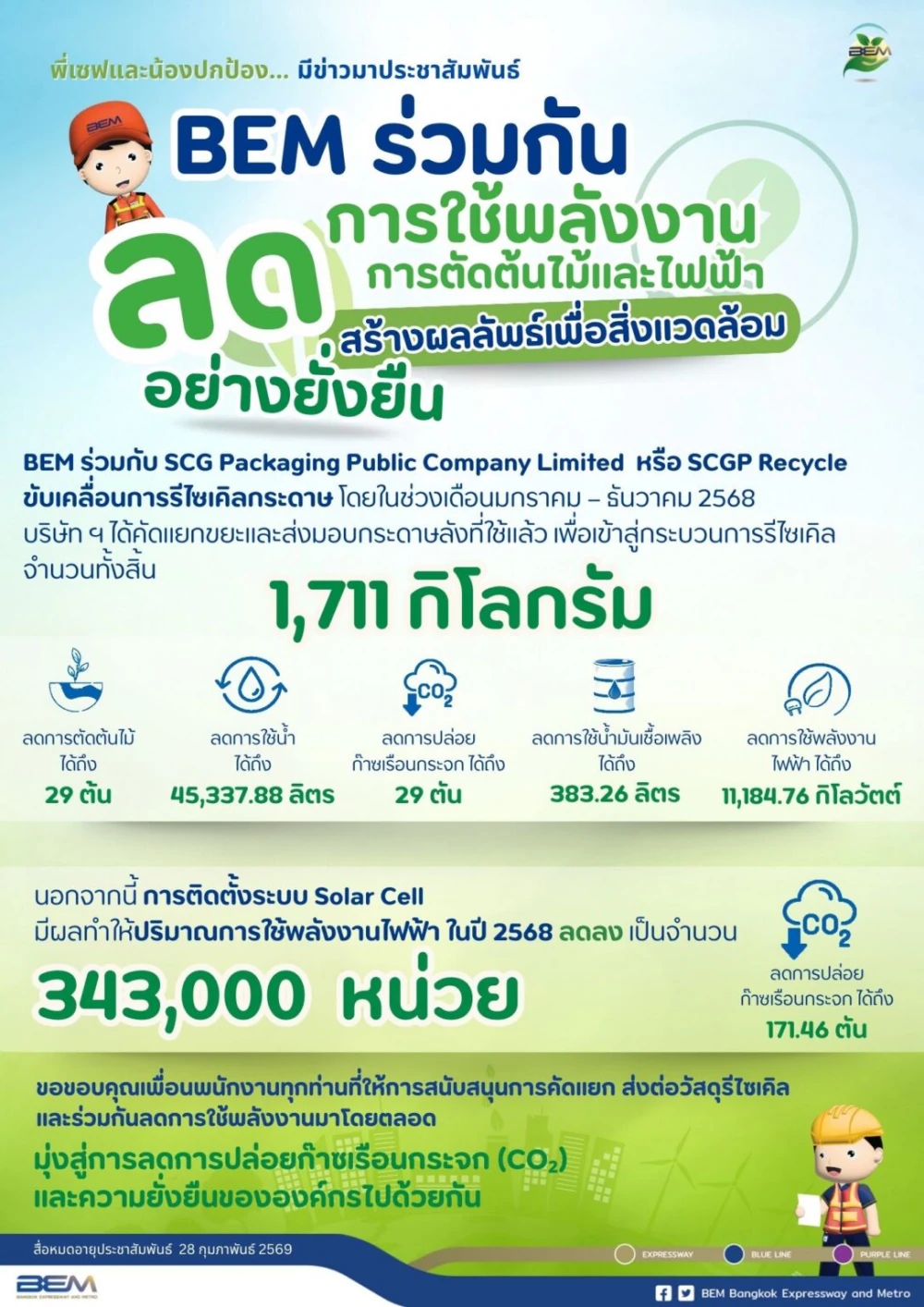
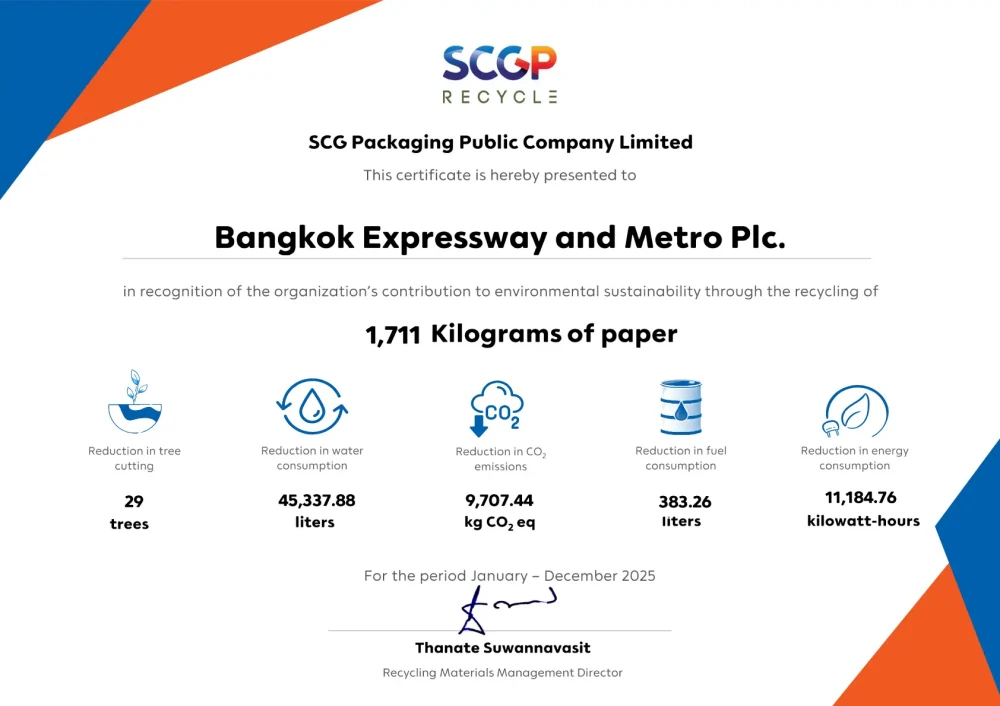
BEM, in collaboration with SCG Packaging Public Company Limited (SCGP) under the "SCGP Recycle" Project, segregated and delivered a total of 1,711 kilograms of used corrugated paper for recycling from January to December 2025.
“Orphan Waste” Project
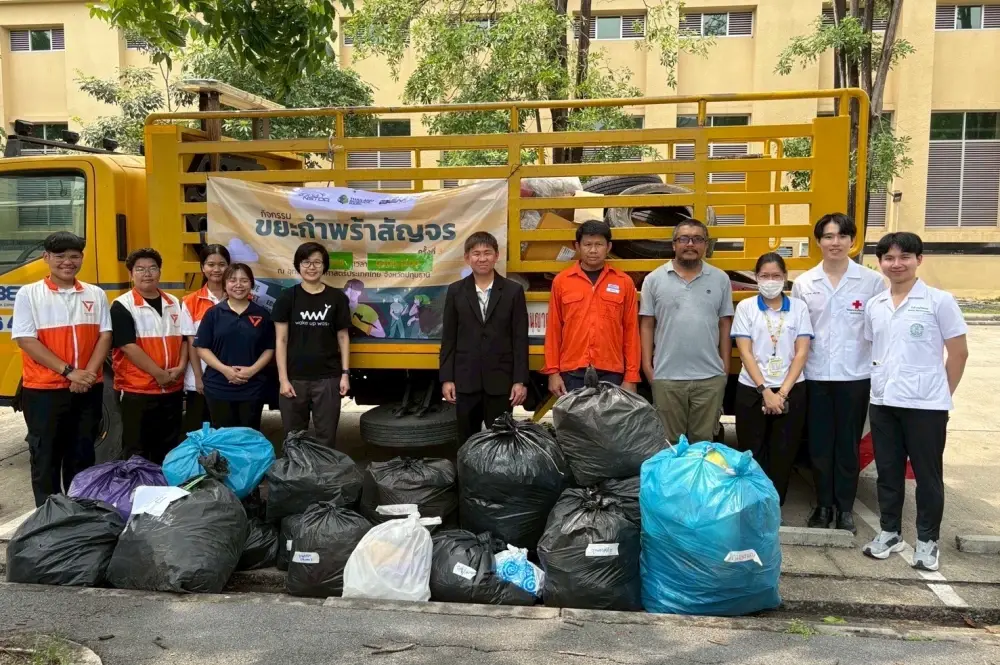
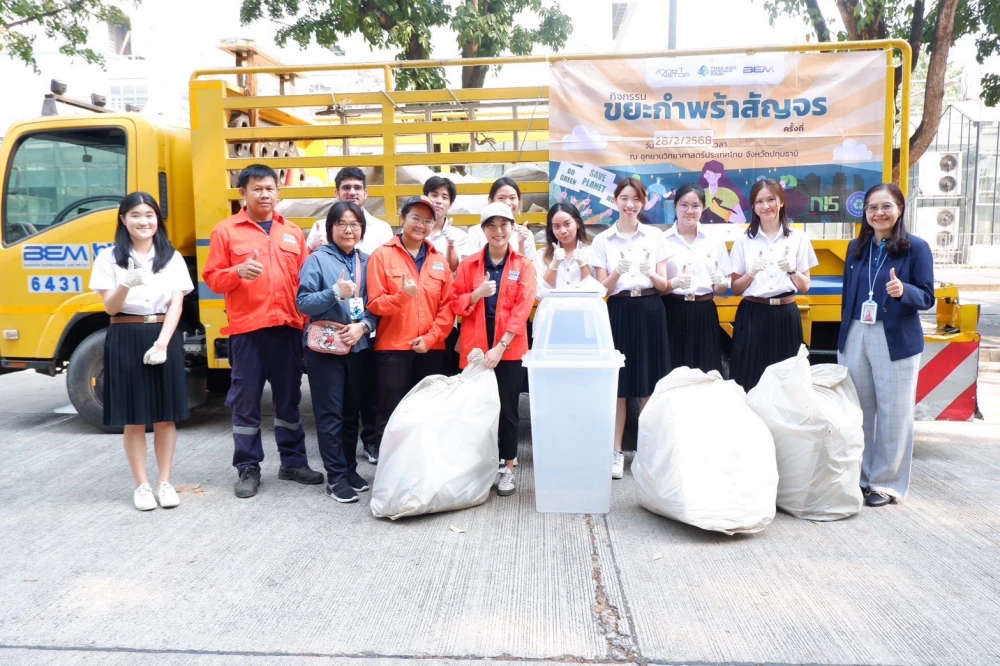
BEM has carried out waste management activities through the “Orphan Waste” project. This initiative is a collaborative effort with the Thailand Science Park (TSP), the National Science and Technology Development Agency (NSTDA) and a private waste disposal contractor, Better World Green Public Company Limited (BWG). The project focuses on diverting non-recyclable waste, including waste collected from sweeping and cleaning operations on expressways into a disposal process utilizing Refuse-Derived Fuel (RDF) technology. This waste is converted into alternative energy for power plants or cement kilns, effectively reducing the volume of waste sent to landfill.
In 2025, a total of 16,320 kilograms of waste was diverted to the project, which successfully generated 9,792 kilowatt-hours (kWh) of energy from refuse-derived fuel (RDF)
“Environmental Promotion” Project
BEM has implemented an environmental promotion and awareness project to educate and encourage employees, contractors, and customers on proper waste segregation. This initiative aims to raise awareness and promote active participation in sorting and delivering recyclable materials, such as plastic bottles, aluminum cans, beverage cartons, paper, and glass bottles to various organizations for recycling or further beneficial utilization.
In 2025, BEM collected a total of 4,287.02 kilograms of recyclable waste through the Environmental Promotion Project, successfully reducing GHG emissions by a total of 14.01 tCO2e.
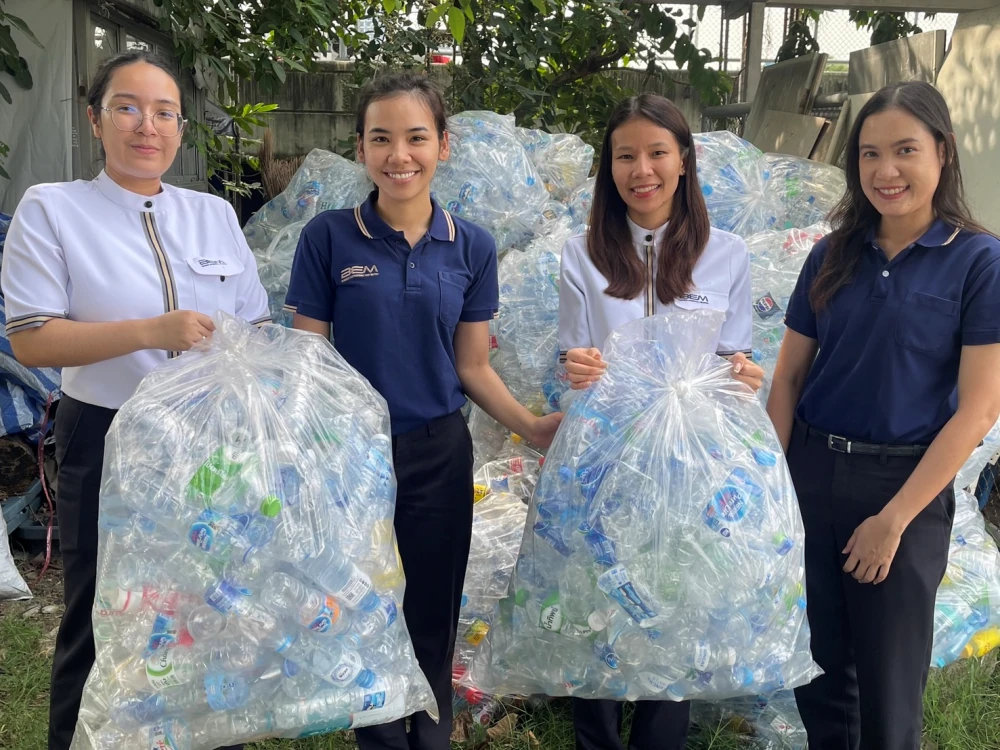
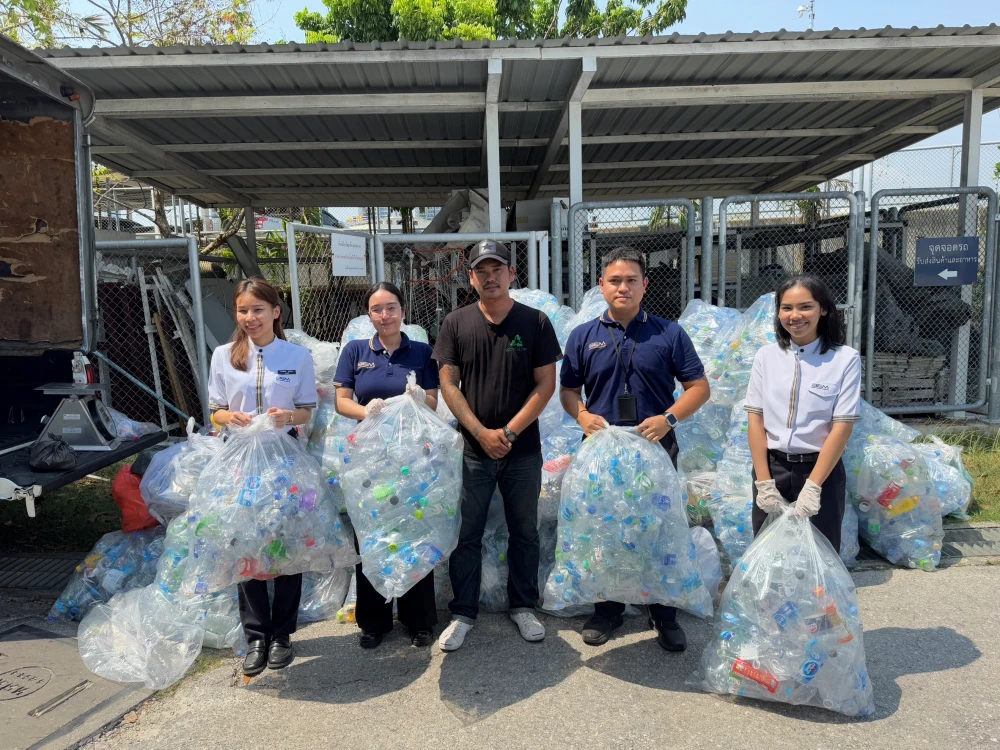
Plastic Bottles
| Processed into Plastic Pellets (kg) | From Plastic Bottles Waste (kg) | GHG Emissions Reduction (tCO2e) |
|---|---|---|
| 1,217.60 | 1,217.60 | 1.25 |
Aluminum Cans
| Processed into New Aluminum Cans (kg) | From Aluminum Cans Waste (kg) | GHG Emissions Reduction (tCO2e) |
|---|---|---|
| 10,955.70 | 156.51 | 1.24 |
Beverage Cartons
| Processed into Green Board (sheet) | From Beverage Carton Waste (kg) | GHG Emissions Reduction (tCO2e) |
|---|---|---|
| 1 | 19.65 | 0.08 |
Paper
| Trees Saved from being Cut Down (trees) | From Paper Waste (kg) | GHG Emissions Reduction (tCO2e) |
|---|---|---|
| 188 | 3,204.12 | 11.37 |
Glass bottles
| Glass Bottles Reused (bottles) | From Glass Bottles Waste (kg) | GHG Emissions Reduction (tCO2e) |
|---|---|---|
| 249 | 249.14 | 0.07 |
| Recycled Waste (kg) | GHG Emissions Reduction (tCO2e) |
|---|---|
| 4,287.02 | 14.01 |
“Precious Waste” Project
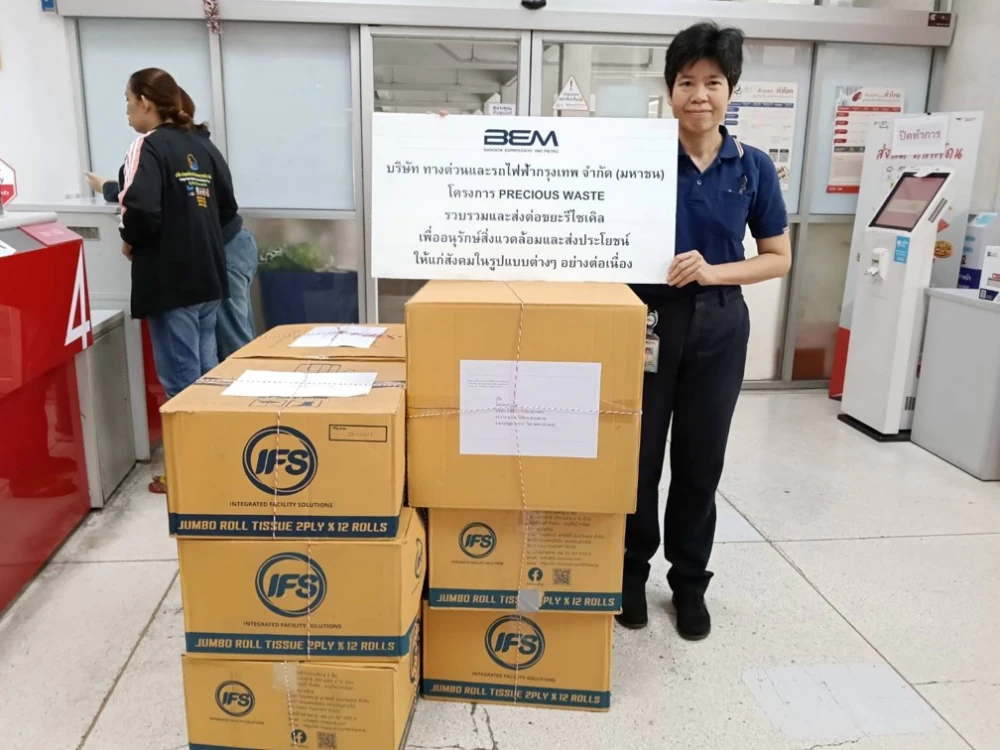
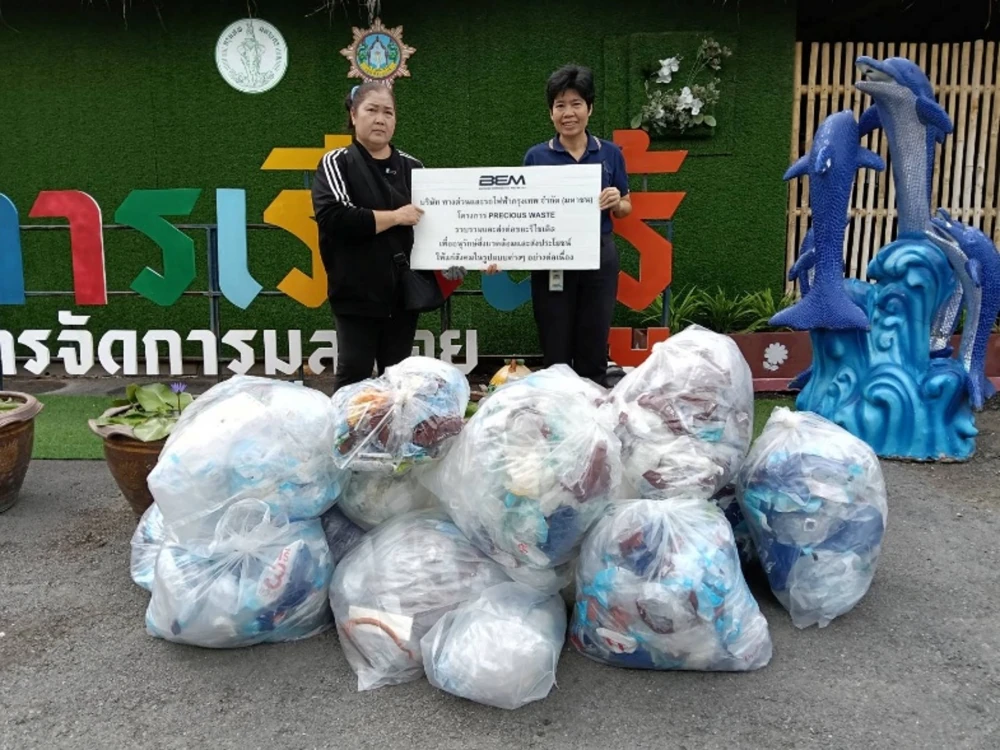
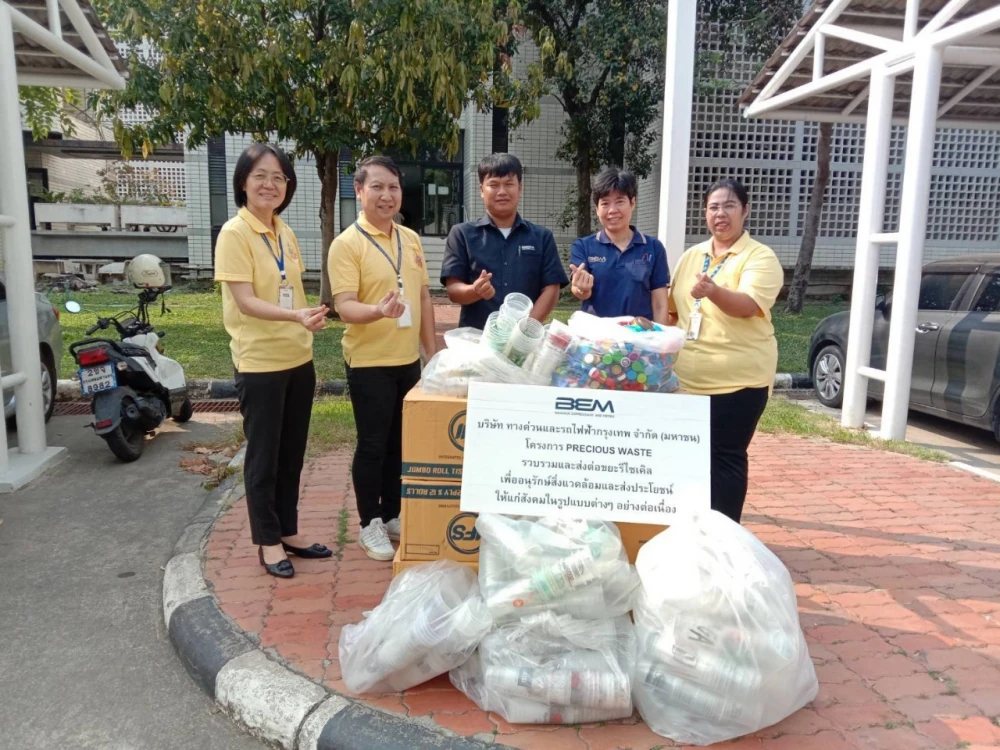
BEM has collected used plastic straws, plastic bags and stretchable plastic film (soft plastics), specifically segregating only clean and dry materials to donate to the “Won” Project of TPBI Public Company Limited. This initiative collects plastic bags and stretchable plastic films to re-enter them into the recycling and upcycling processes to manufacture new products. This effort effectively reduces the volume of waste destined for final disposal and supports circular economy principles.
In addition, BEM has collaborated with the Bangkok Metropolitan Administration (BMA) and related agencies to set up additional donation drop-off points within various communities, such as the Bang Phai community, providing greater convenience for the public to donate these types of plastics. In 2025, the Company successfully collected 133 kilograms of stretchable plastic waste, reducing GHG emissions by a total of 199.50 tCO2e.
| Stretchable Plastic Waste (kg) | GHG Emissions Reduction (tCO2e) |
|---|---|
| 133 | 199.50 |
“Recycled Plastic Bottle Cap Upcycling: Plant Pot” Project
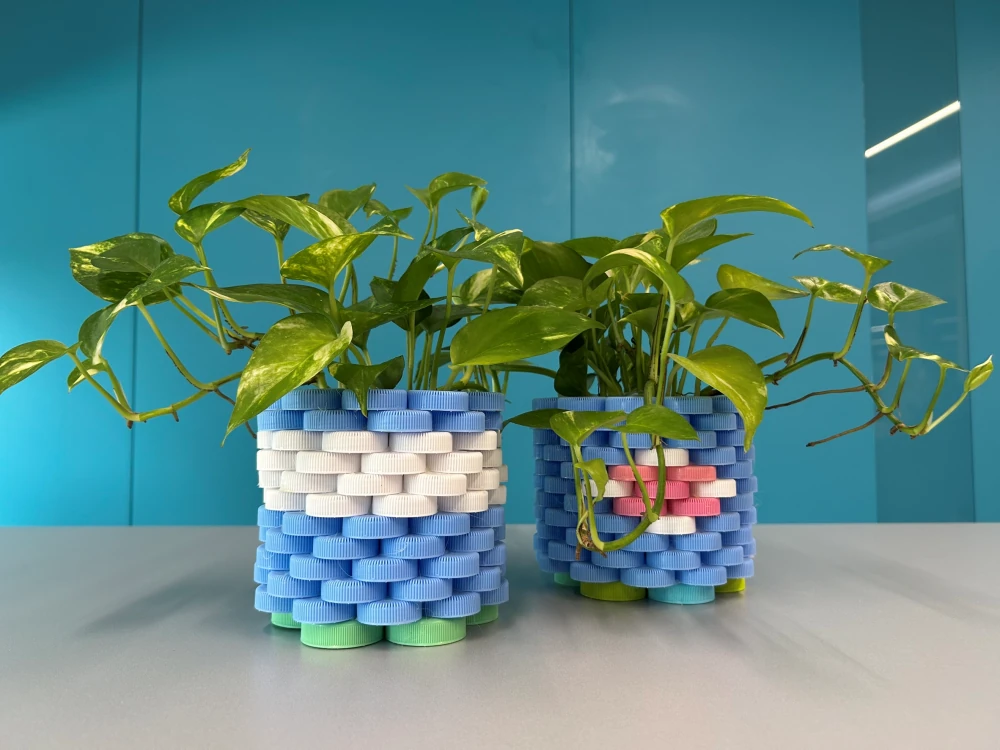
BEM has collected used plastic bottle caps from its facilities to be segregated and utilized as raw materials for producing plant pots from recycled plastic bottles caps. Throughout the project’s duration, the Company successfully collected no fewer than 2,700 bottle caps, which were transformed into 27 plant pots. This initiative aims to expand green spaces within the office, mitigate plastic waste and cultivate environmental awareness among employees.
| Processed into Plant Pots (pots) | From Plastic Bottle Cap Waste (bottle caps) | GHG Emissions Reduction (tCO2e) |
|---|---|---|
| 27 | 2,760 | ≈0.00642 |
“Shred2share” Project
BEM has collected discarded confidential documents and used paper to undergo a recycling process for the production of new recycled paper.
| Trees Saved from being Cut Down (trees) | From Paper Waste (kg) | GHG Emissions Reduction (tCO2e) |
|---|---|---|
| 226 | 13,316 | 47.27 |
“Keyhole Garden” Project
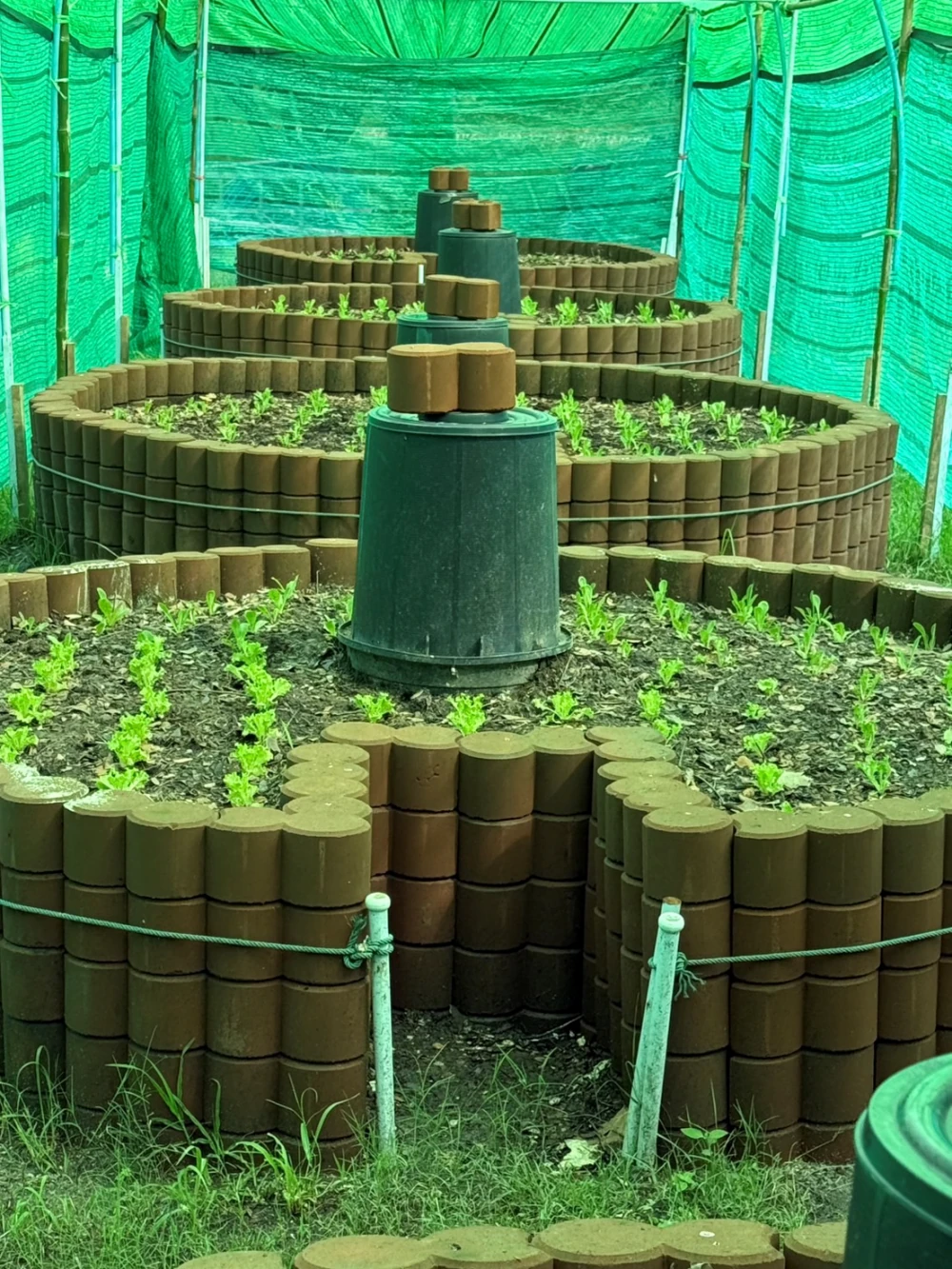
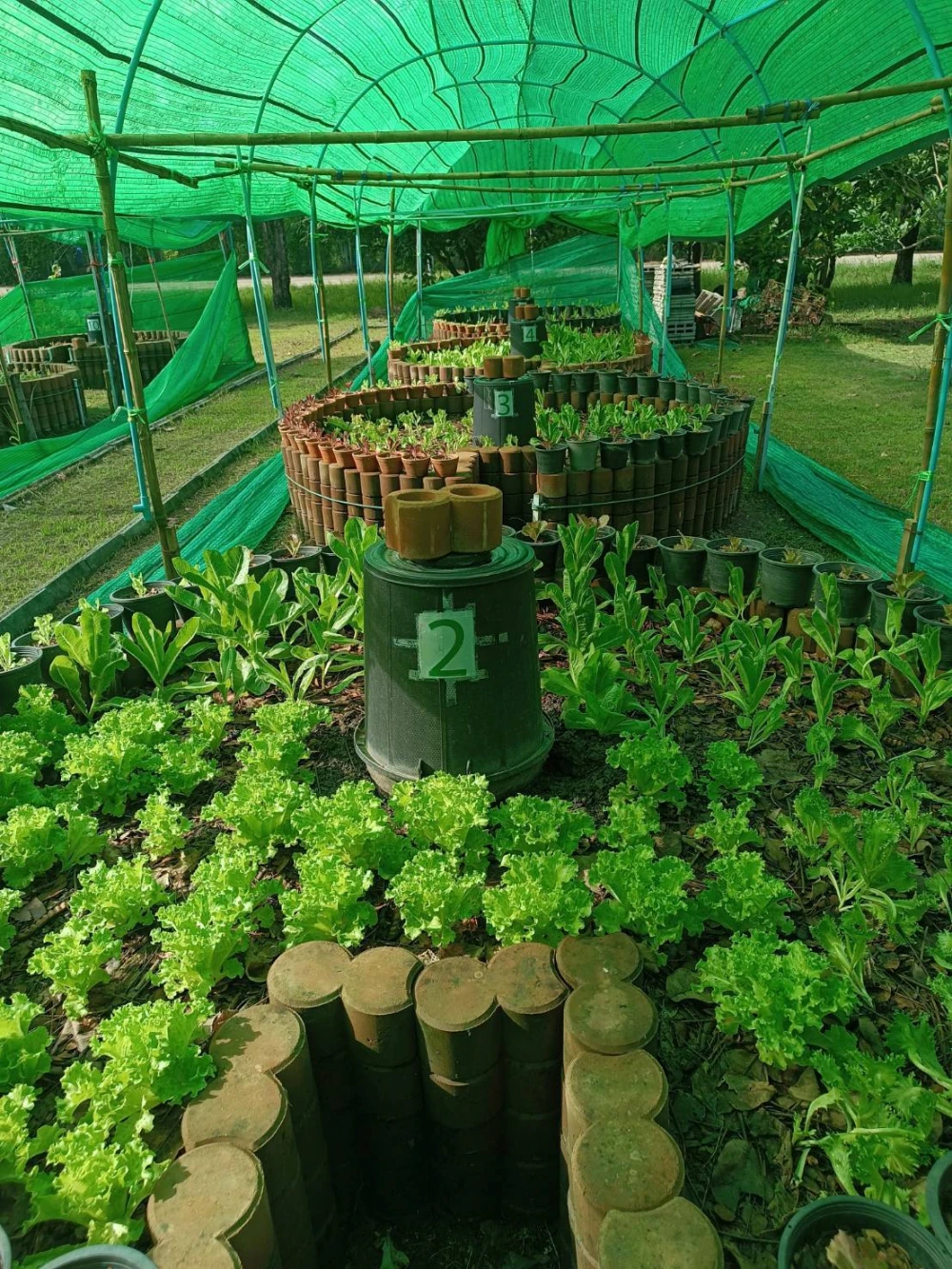
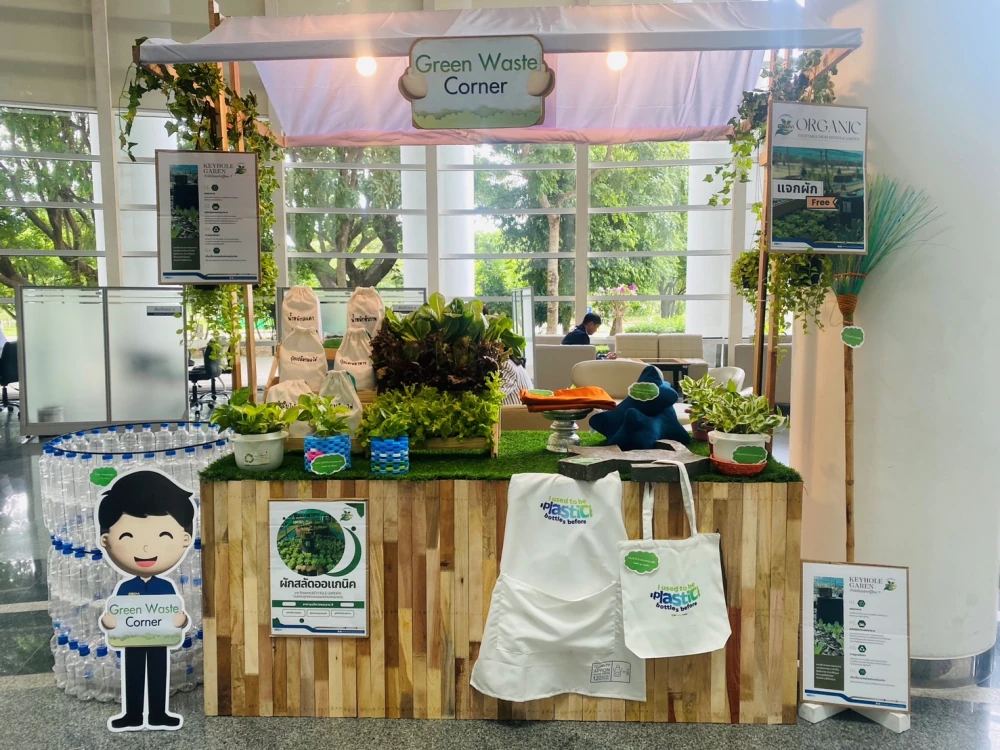
BEM has segregated reusable food waste suitable for beneficial use from the canteen and utilized organic food scraps in the Keyhole Garden system to facilitate decomposition and enrich soil quality within the office compound. Additionally, suitable food scraps were repurposed as fish feed under strict cleanliness and safety protocols. These initiatives successfully reduce the volume of food waste requiring final disposal, foster environmental participation among employees, support circular economy through the Keyhole Garden system, and promote resource circularity aligned with Circular Economy principles. In 2025, the Company successfully collected 14,033.90 kilograms of food waste, reducing GHG emissions by a total of 7.58 tCO2e.
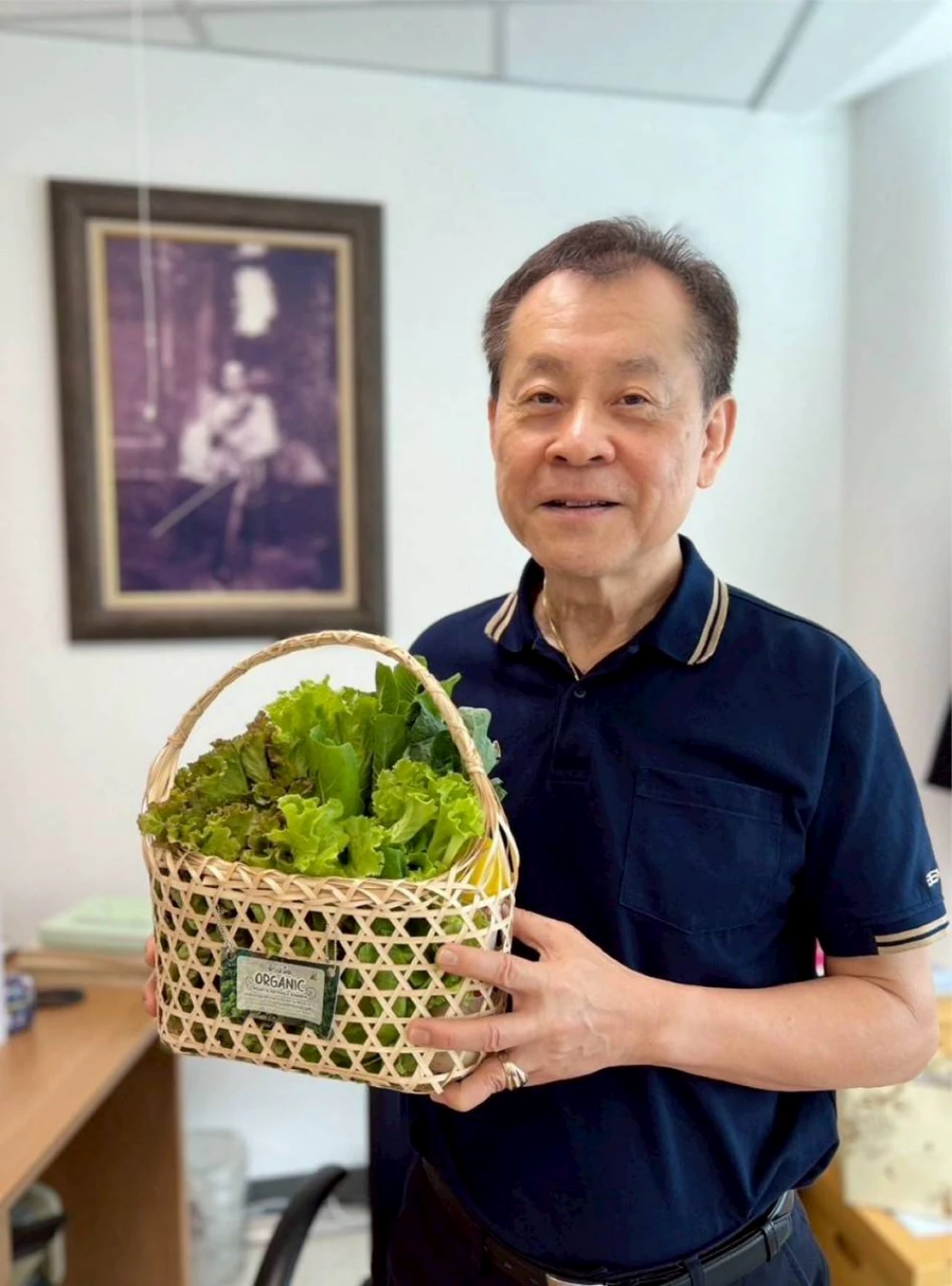
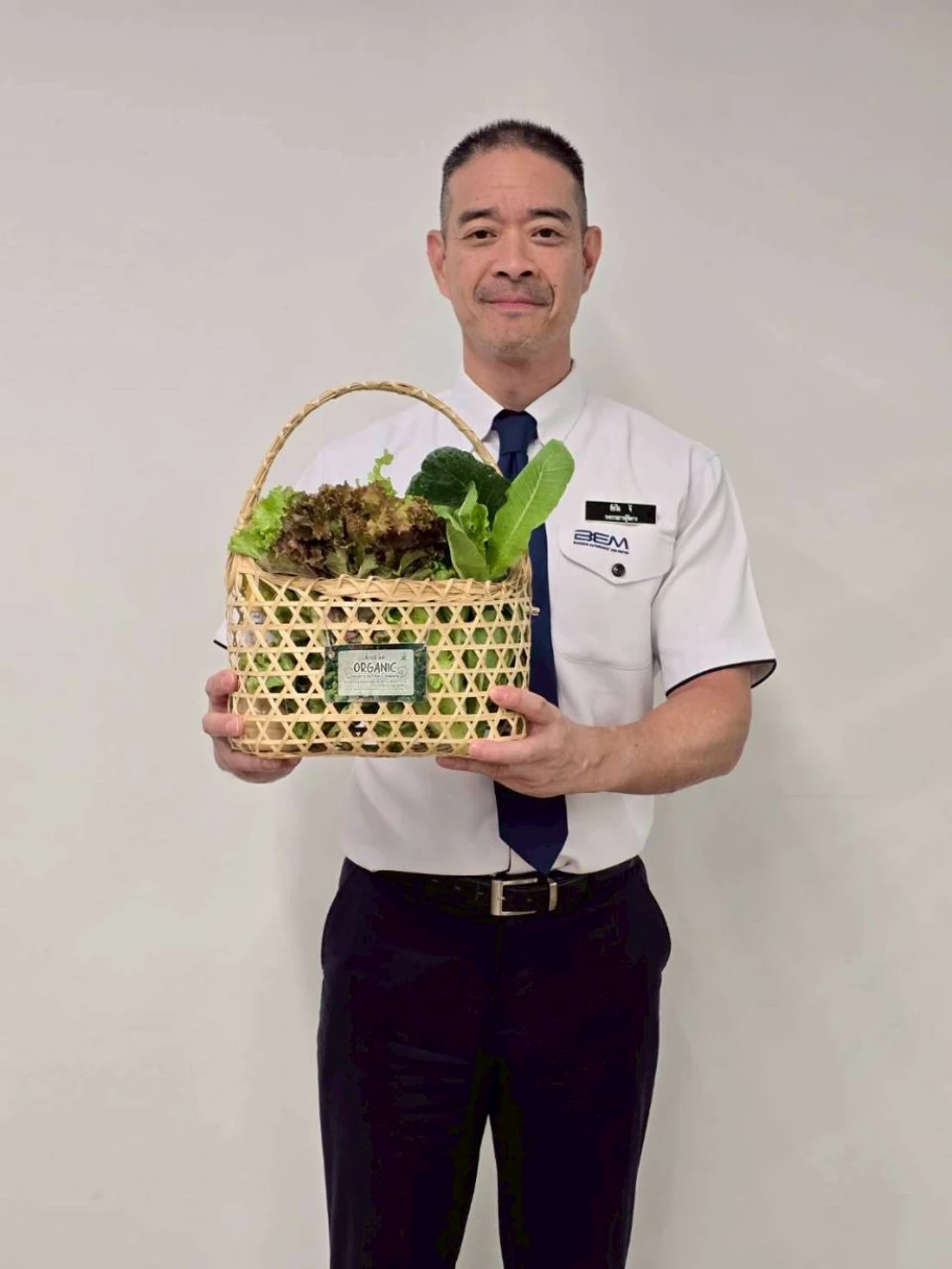
In addition, BEM has established vegetable plots using soil and bio-fertilizers derived from the decomposition of food scraps and dry leaves for cultivation. Recycled water from the wastewater treatment system was also utilized for irrigation. The vegetables, cultivated through this project, include Green Oak, Red Oak, Cos, Frillice Iceberg, Curly Kale, Dinosaur Kale, Japanese cucumbers, water spinach, and baby bok choy.
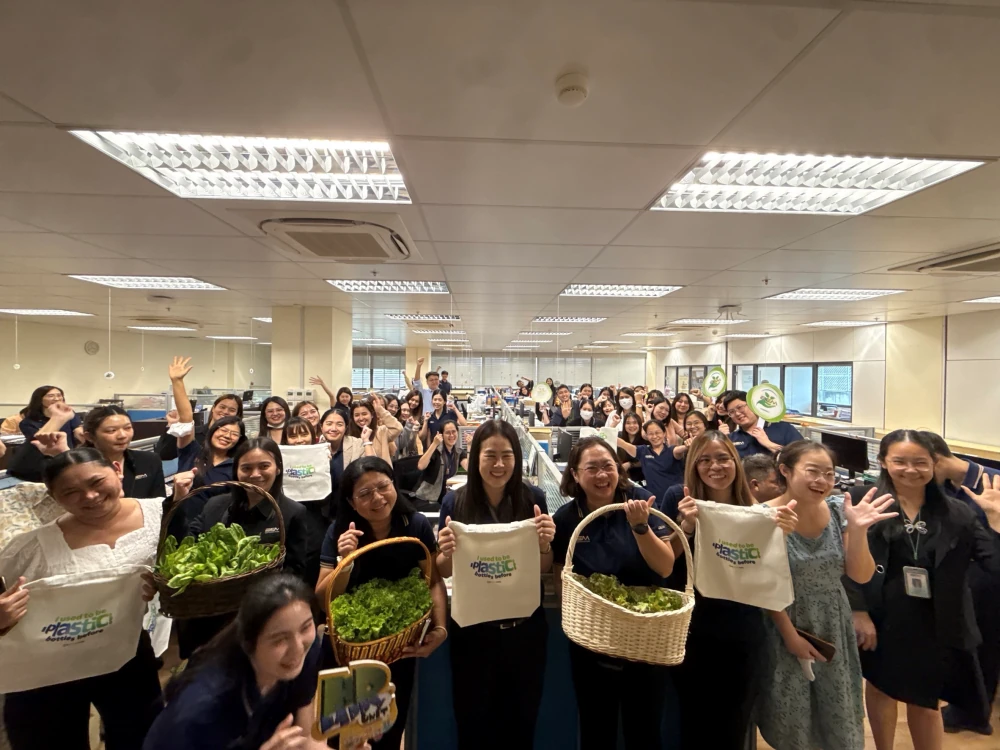
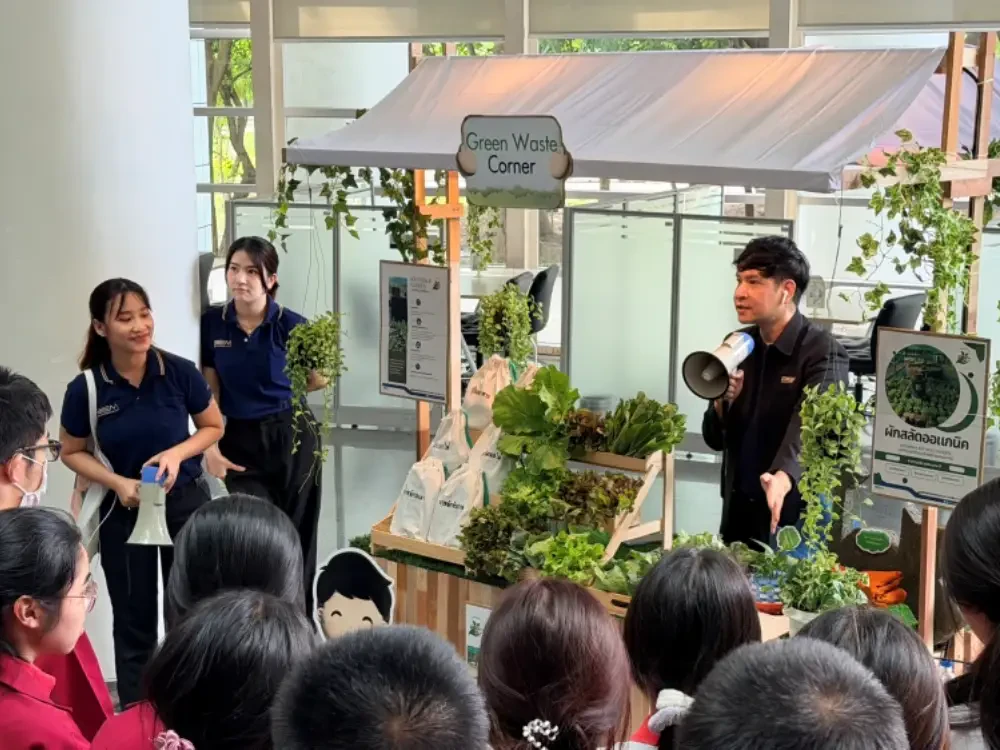
In 2025, the project fully achieved 100% of its targets, with 650 employees participating in the activities. The project successfully harvested approximately 2,000 heads of vegetables (or equivalent to a weight of approximately 160 kilograms), which were distributed to employees and stakeholders during various corporate activities.
| Utilization | Food Waste Volume (kg) | GHG Emissions Reduction (tCO2e) |
|---|---|---|
| Processed via Keyhole Garden & Green Cone | 3,534.80 | 1.91 |
| Repurposed as Fish Feed | 10,499.10 | 5.67 |
| Total Food Waste Diverted for Beneficial Use (kg) | GHG Emissions Reduction (tCO2e) |
|---|---|
| 14,033.90 | 7.58 |
“Waste for Seedlings” Project
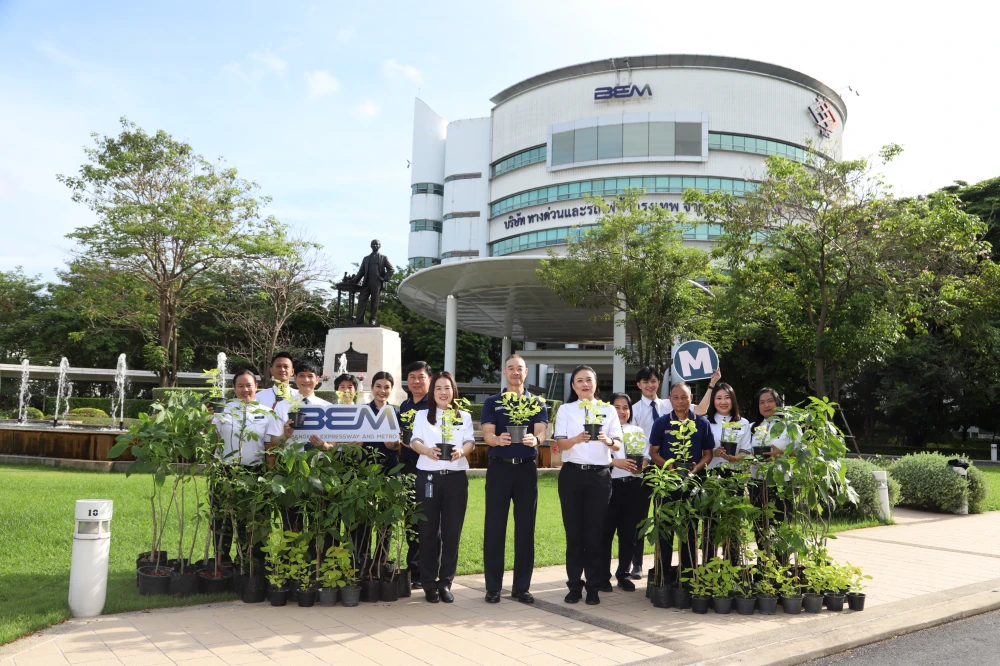
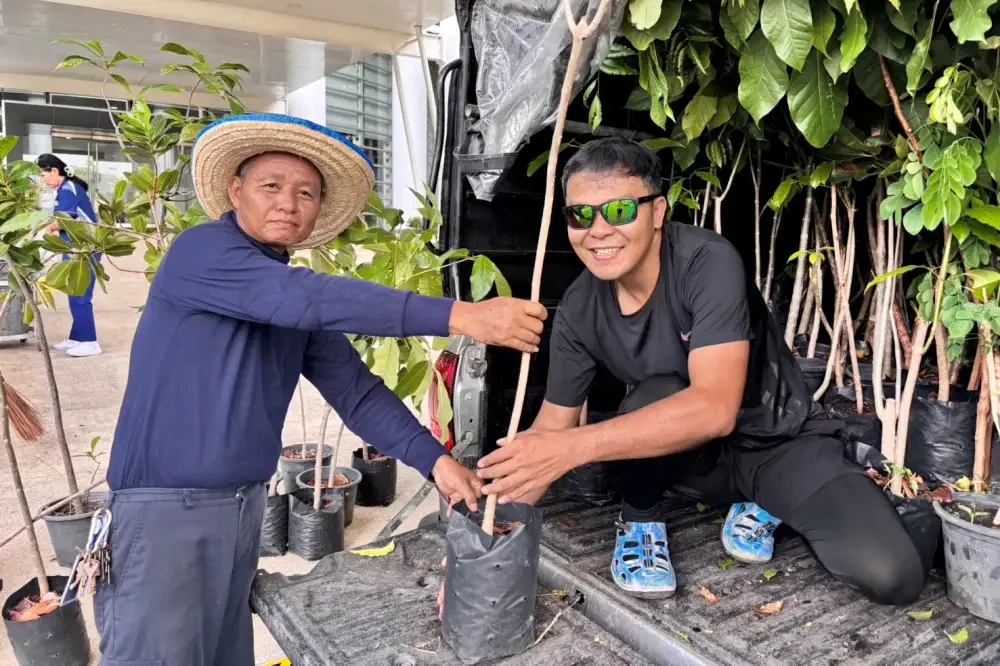
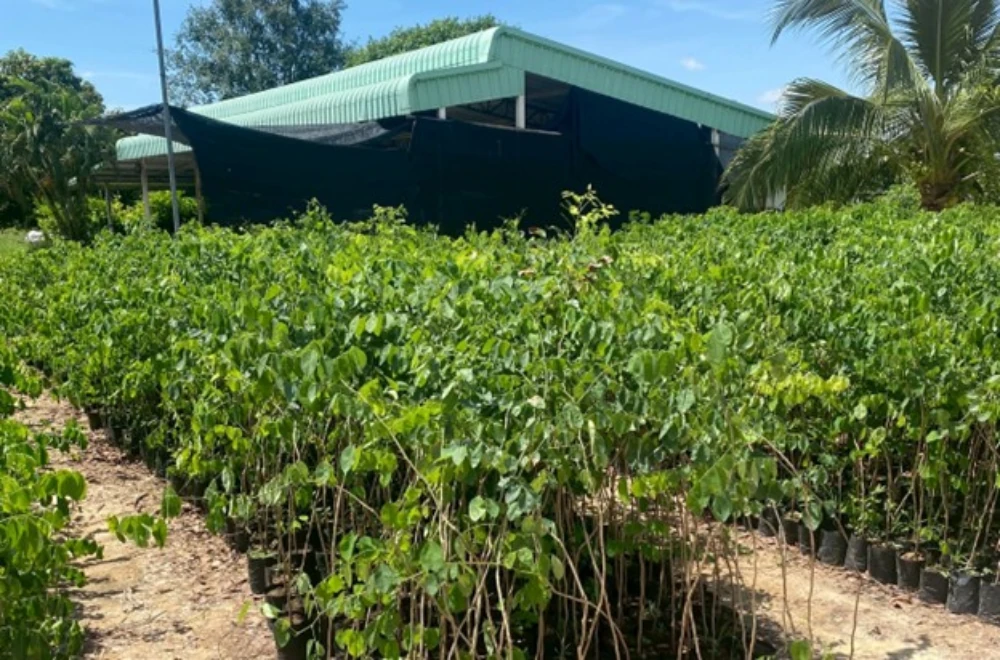
BEM has implemented the “Waste for Seedlings” project to add value and create benefits from food scraps, coffee grounds, fruit peels, and eggshells collected from the canteen, catering events, and office kitchens. These waste materials undergo a decomposition process to produce soil and bio-fertilizers specifically for cultivating seedlings. This project aims to cultivate tree seeding and propagate treesto be distributed to various stakeholder groups.
The soil and bio-fertilizers generated from the project were successfully utilized to cultivate 700 perennials tree seedlings. These seedlings were designated for firebreak reforestation activity at Wat Pa Phu Long in Chaiyaphum Province, Thailand, organized in collaboration with CH. Karnchang Public Company Limited (CK), as well as for various corporate environmental activities. This initiative successfully achieved 100% of its performance targets.
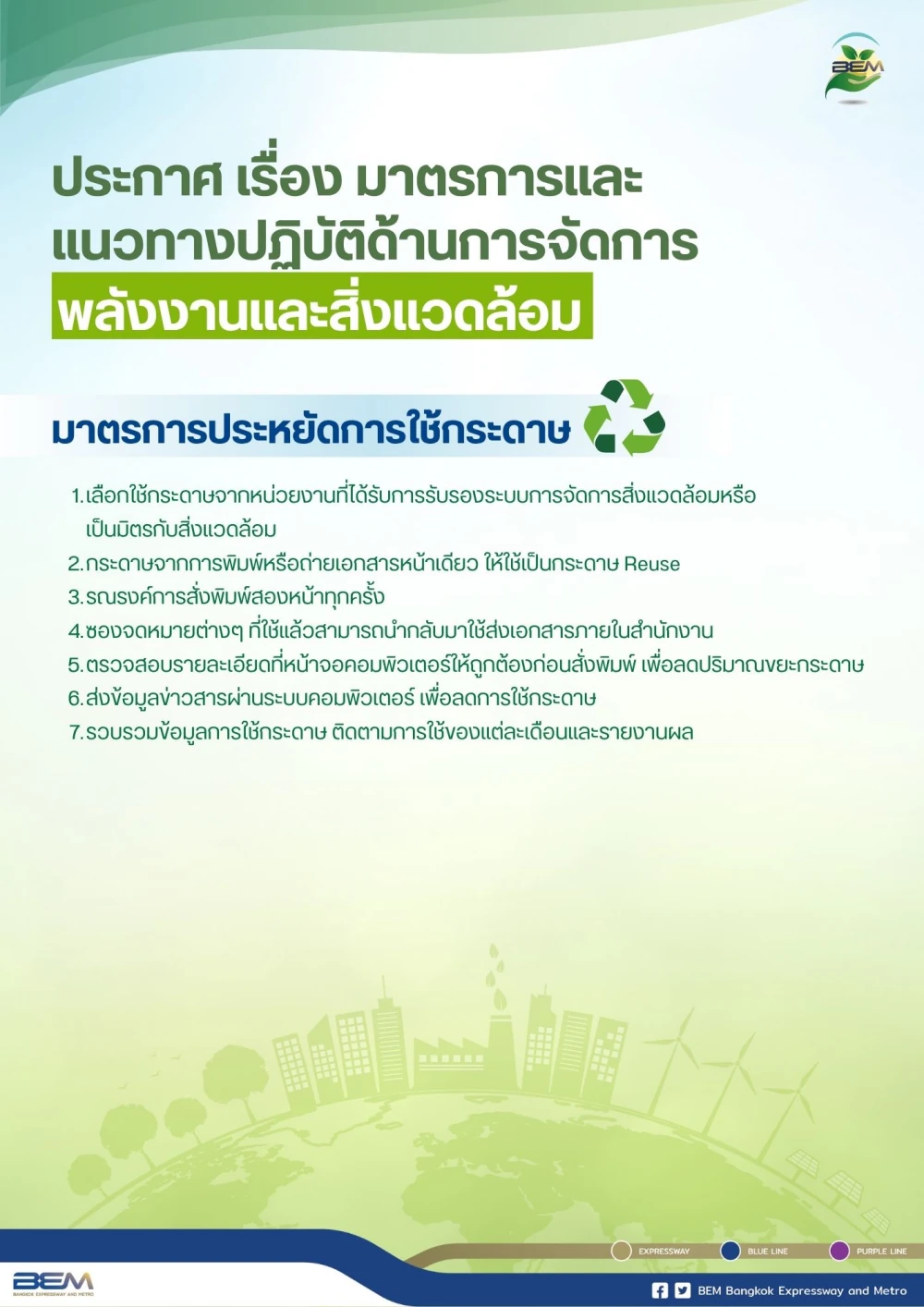
“Office Paper Reduction” Project
BEM has continuously implemented paper reduction measures across both its expressway and rail businesses to promote maximum resource efficiency. This is achieved through the transition to electronic document systems in place of physical paper, the implementation of a Paperless Meeting System, the optimization of document workflows, and an active corporate campaign encouraging employees to reduce unnecessary paper consumption while promoting the reuse of paper.
In 2025, BEM set a target to reduce paper consumption by 1% compared to the previous year. The project successfully exceeded the target, reducing paper use by 253,502 sheets, representing a 5.29% decrease from the prior year, and resulting in cost savings of 99,300.40 THB.