


Materiality Assessment
Materiality assessment is essential in defining the direction of the organization's development in accordance with corporate objectives and stakeholder expectations.
It assures the organization that environmental, social, and economic & governance (ESG) policies and sustainability operations are being driven towards the appropriate direction while also considering human rights issues.
BEM conducted a materiality assessment of topics associated with business operations in line with the Global Reporting Initiative (GRI) 2021 Standards to identify and report key ESG topics. In doing so, the Company took into account the perspective of the Company's internal and external stakeholders. Then, the Company considered which topics were most significant or relevant to the Company's business operations and the stakeholders. Acting in compliance with the GRI Standards, the Company is assured that the materiality assessment and reporting are reliable, transparent, and comparable with other organizations in the same industry. Subsequently, the assessment results were appropriately used to support decision-making on policies and sustainability management guidelines in 2023-2026 as well as to define the contents of each issue in the Sustainability Report in order to disclose BEM's sustainability performance to stakeholders. The Company will review the material sustainability topics every three years.
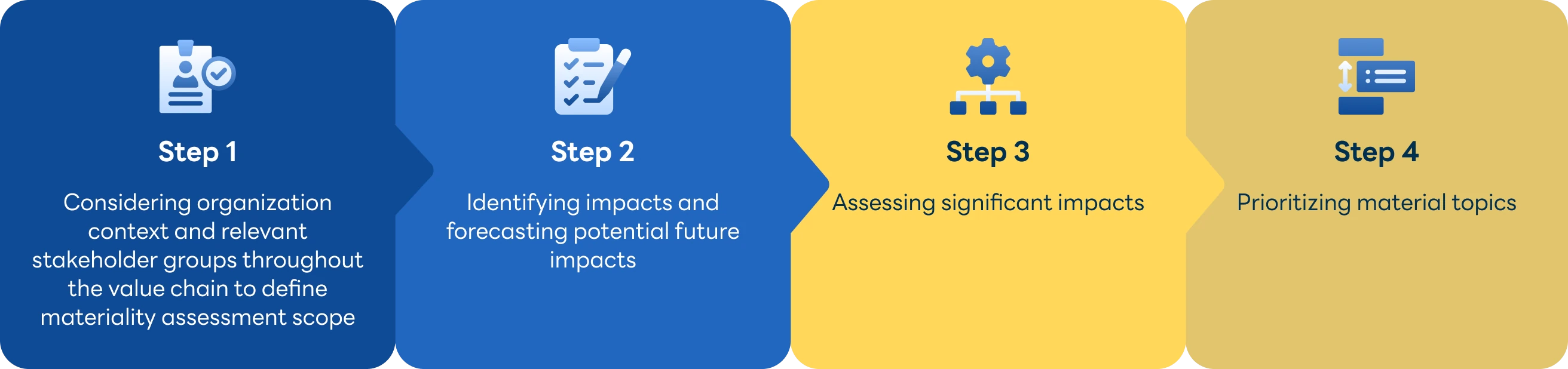
Step 1 Considering organization context and relevant stakeholder groups throughout the value chain to define materiality assessment scope
- Consider the nature of activities and the organization context in conducting business as well as relevant stakeholder groups throughout the value chain.
- Study global trends and key sustainability topics that affect business operations in the same industry group to pre-determine material topics.
Step 2 Identifying impacts and forecasting potential future impacts
- Identify impacts by discussing with internal and external stakeholders to jointly consider all impacts on stakeholders.
- When specifying the impacts of material topics, both actual and potential impacts on the environment, society, economy and human rights shall be taken into account. The consideration of these impacts will allow BEM to comprehend the opinions, expectations, and concerns of internal and external stakeholders.
Step 3 Assessing significant impacts
- Gather opinions from all eight stakeholder groups on topics of importance to the environment, society, and economy, including human rights impacts. Consider the positive and negative impact spectrum in the short and long term, and the irremediable character of the impact, covering all the Company's business activities across the value chain.
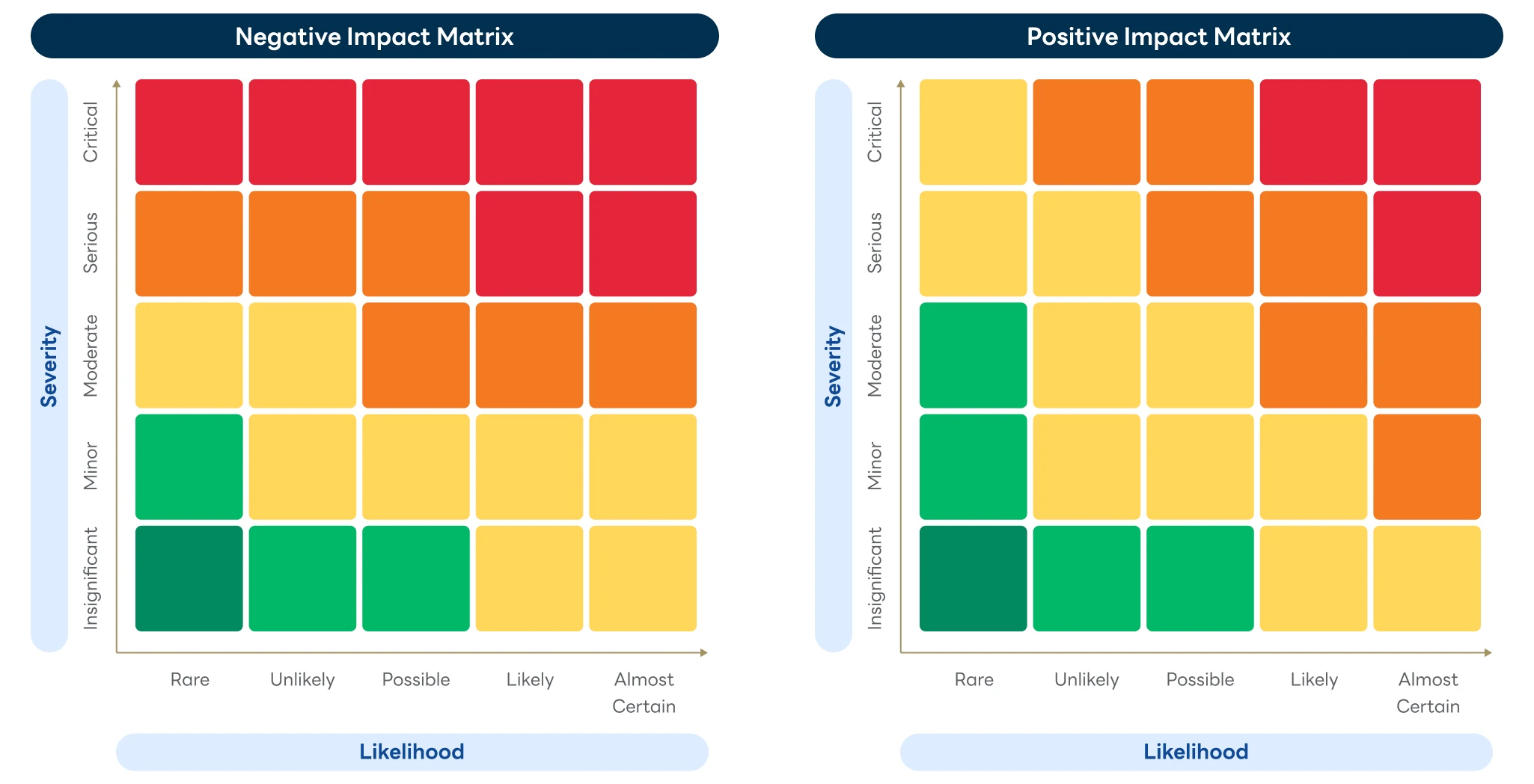
- Calculate the level of significance by considering the likelihood and severity, which consists of scale, scope, and irremediable character of the impact.
BEM has adjusted the Company's criteria for considering impact significance by employing a matrix to assess impact severity and tendency. Such matrix has been adapted from the one the Company used to assess enterprise risks. The assessment results are then incorporated into the positive and negative impact matrix.
Step 4 Prioritizing material topics
After categorizing the impacts and evaluating the significance of each issue, BEM uses the assessment results to prioritize material topics based on the significance of their impacts, which is calculated by weighting both positive and negative assessment results, as well as scores obtained from discussions with external experts, including their opinions and suggestions on topics that are material to the Company's business operations.
Prioritizing material topics enables the Company to align sustainability management guidelines correctly and appropriately. It also helps the Company determine topics that require managing current impacts and/or preventing future negative impacts. Additionally, it may allow the Company to identify topics with positive impacts that lead to future opportunities for both BEM and the Company's stakeholders.
BEM then evaluates and prioritizes the topics based on the Double Materiality framework by comprehensively considering external impacts on society or environment, and internal financial and non-financial impacts on the organization.
Predetermine Material Sustainability Topics
BEM was able to identify a total of 14 material sustainability topics, covering environmental, social, and governance & economic aspects.



Business Excellence and Ethics
- Corporate Governance
- Risk and Crisis Management
- IT Security and Data Privacy
- Supply Chain Management
- Innovation
- Customer Relationship Management



Eco-Friendly Commute
- Energy Management and Climate Change
- Environmental Management
- Biodiversity



Metropolitan Social Harmony
- Health and Safety
- Human Capital Development
- Corporate Social Responsibility
- Stakeholder Engagement
- Human Rights
Assess Significant Impacts
In assessing significant impacts of material topics, BEM assigns different weights to the impact levels. This is because negative impacts are more significant, produce more impacts, and thus need to be corrected before positive impacts.
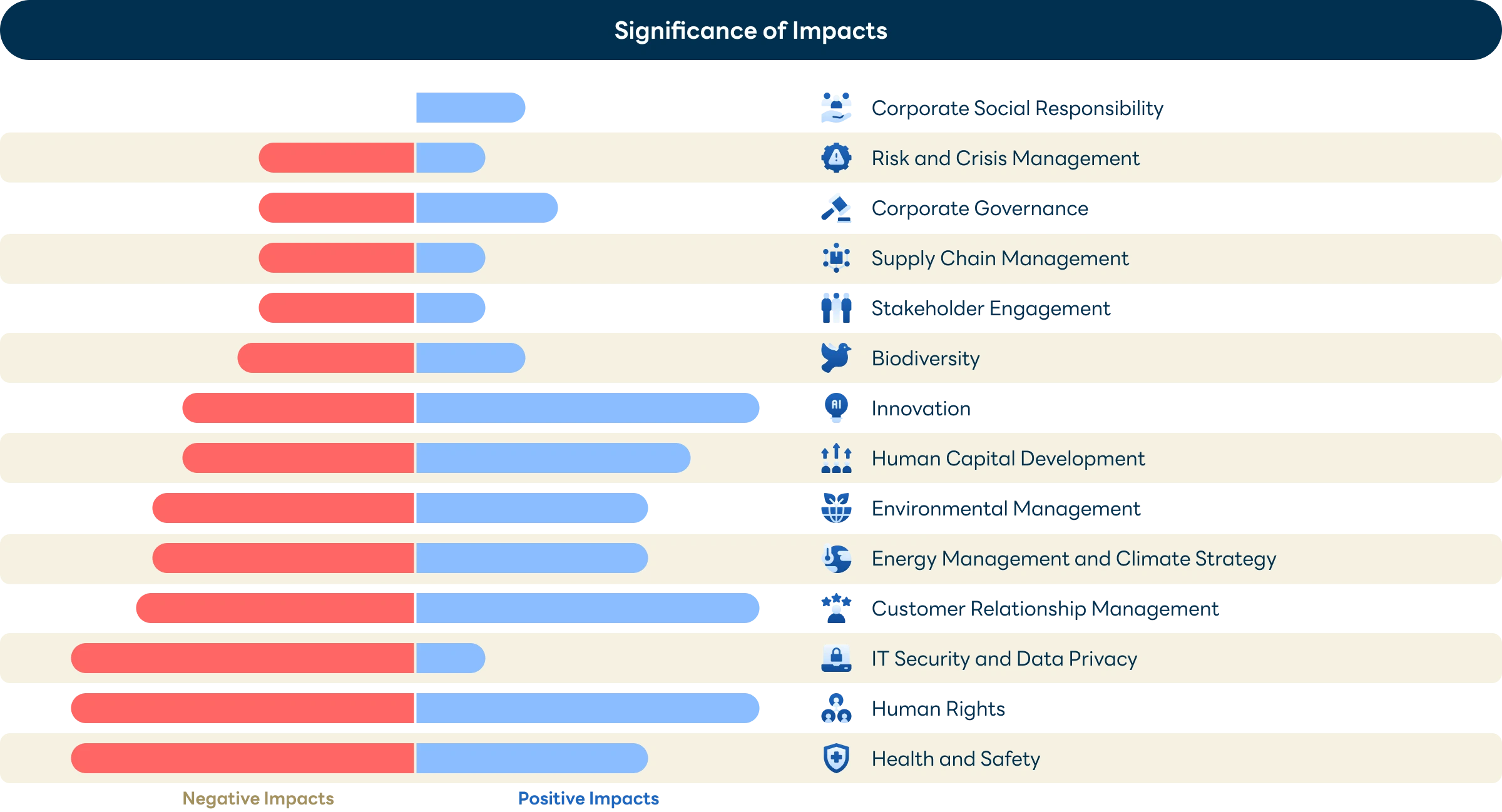
Assess Significant Impacts and Prioritize Material Topics
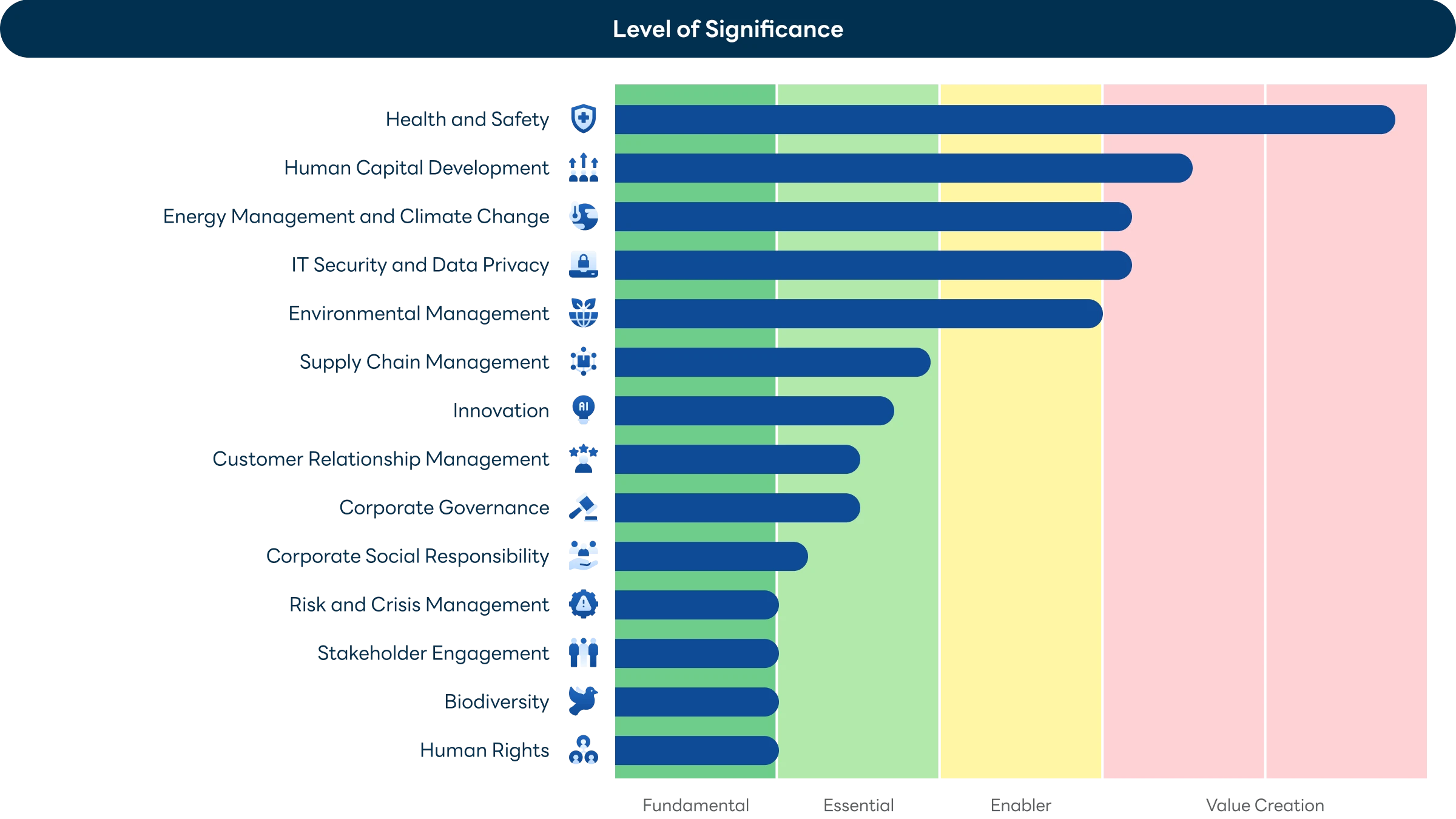
The impact level of each sustainability issue is used to prioritize the material topics. The assessment criteria consist of five levels, namely Very Low, Low, Medium, High, and Very High, which are consistent with the Company's risk assessment criteria.
The impact significance level is calculated by weighting positive and negative assessment results as well as scores obtained from discussions with external experts, including their opinions and suggestions on important material topics related to the Company's business operations.
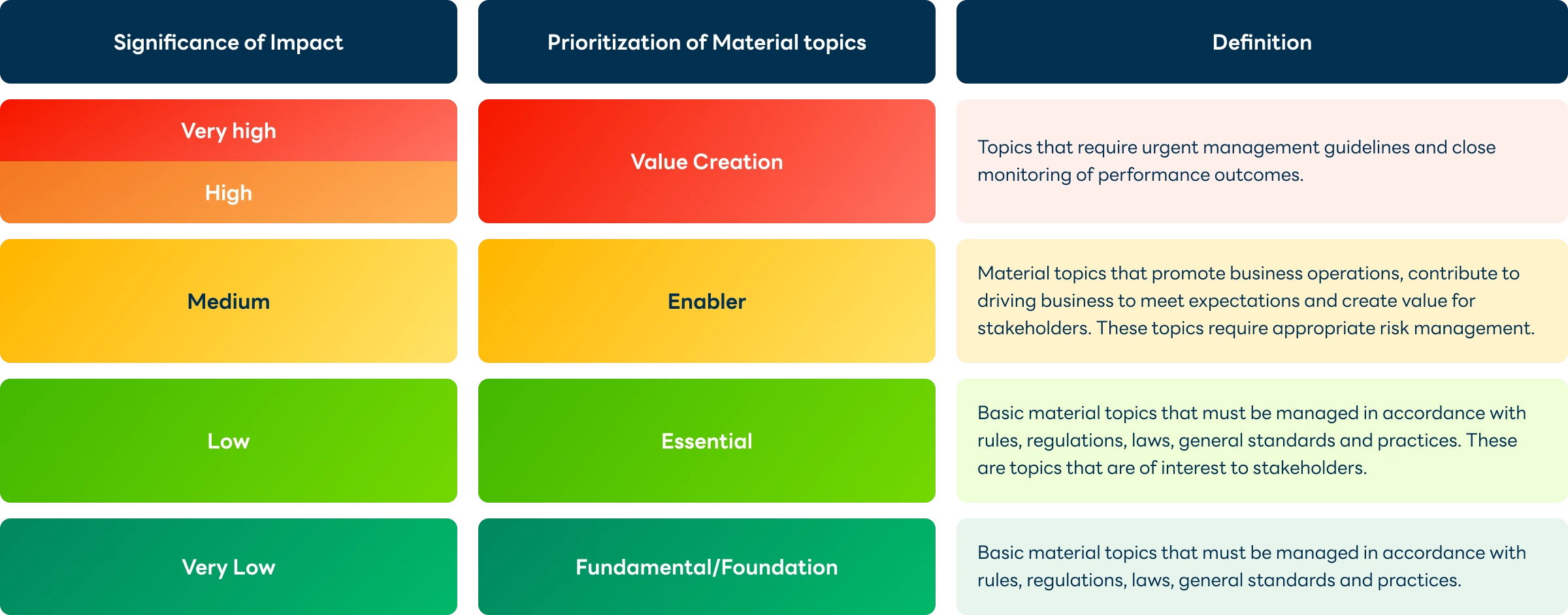
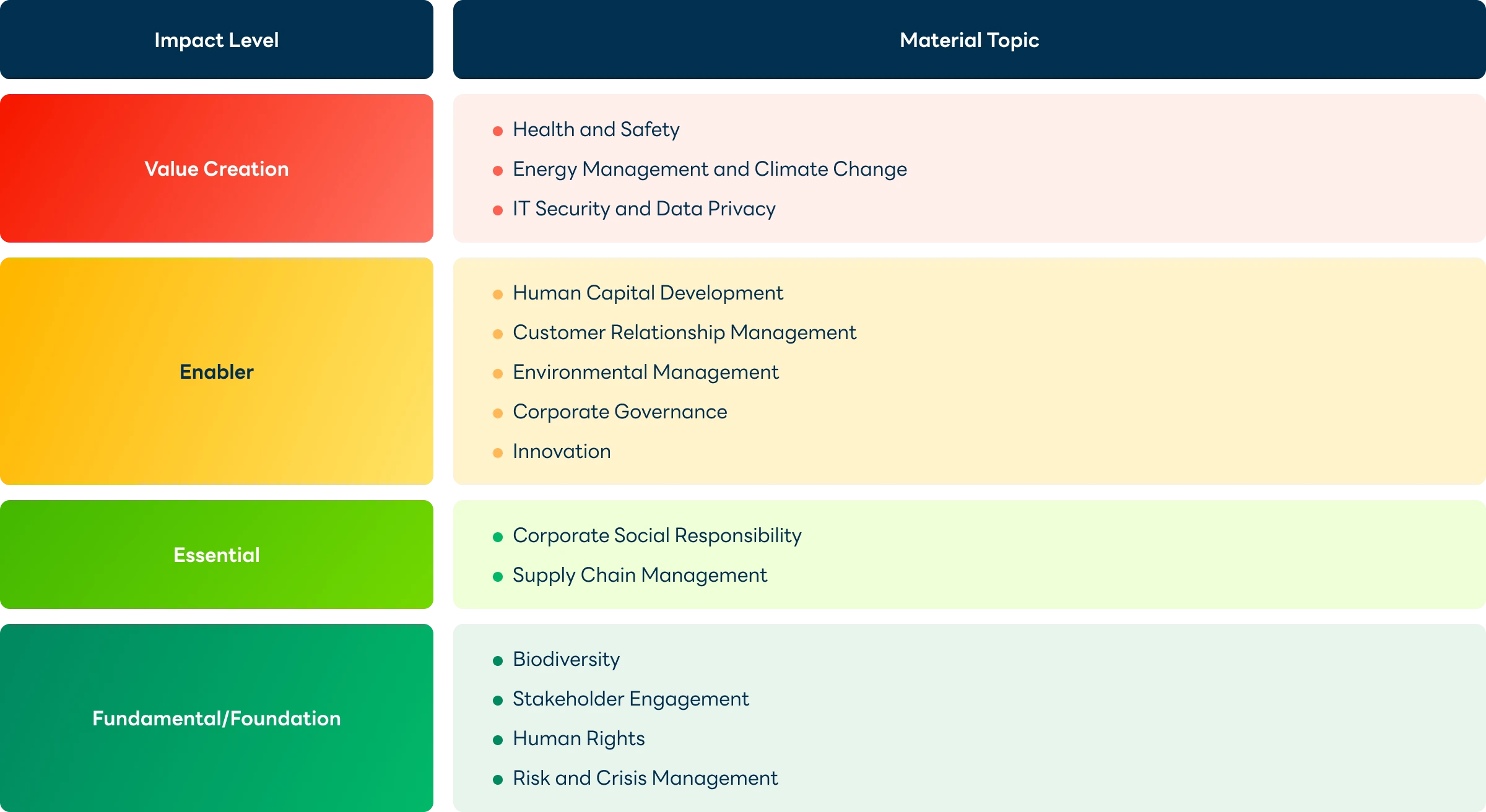
Table Showing the Impact Level of Each Predetermined Sustainability Topic
Double Materiality Assessment
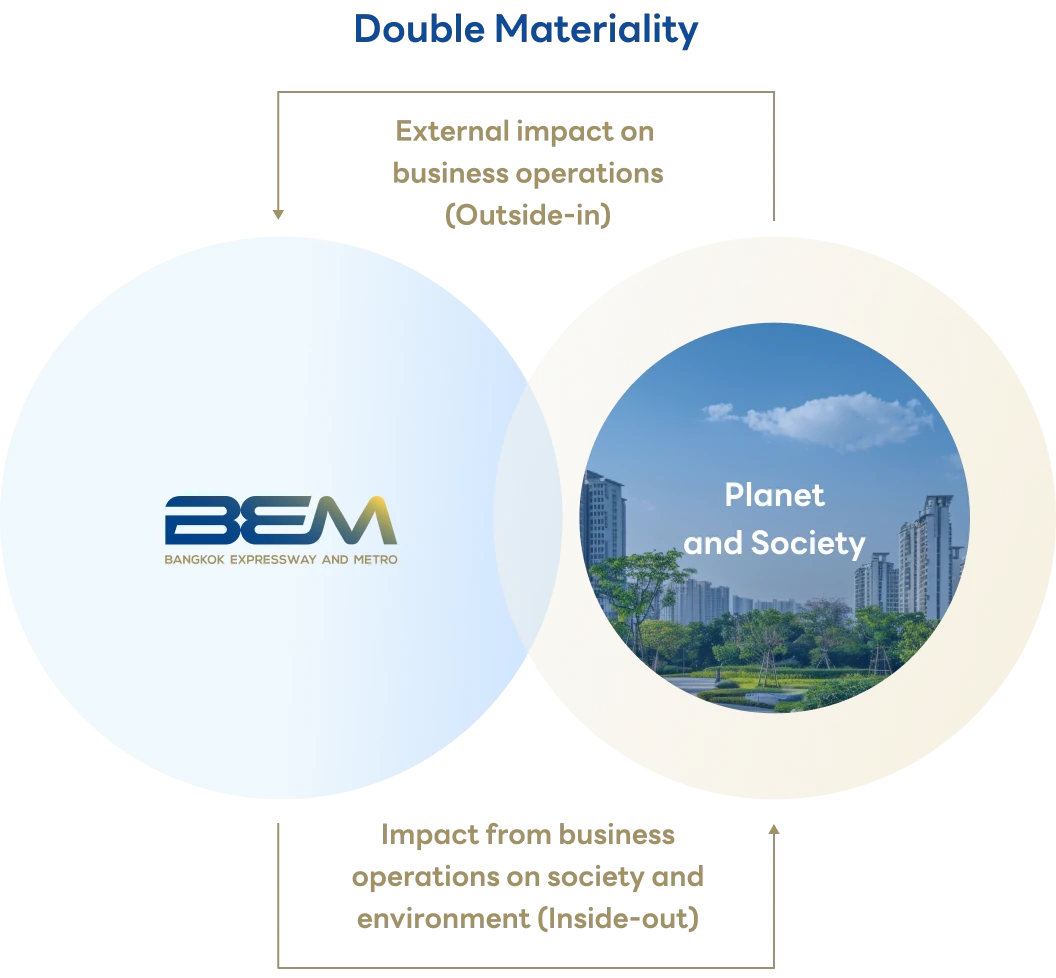
BEM recognizes the importance of considering material topics in sustainable business operations from a double perspective.
- Outside-In Perspective: Material topic to society and environment, which may be caused by the Company's activities or business operations and may eventually produce an impact back on the Company.
- Inside-Out Perspective: Material topic to the Company, taking into account risks with impact on the Company's finances that affect business success and sustainability.
This dual aspect assessment process can help the Company understand and address the materiality of topics associated with the Company's efficient and sustainable business conduct. In practice, the "Double Materiality" approach enables the Company to take responsibility for the Company's stakeholders and the environment as well as drive businesses towards long-term success.
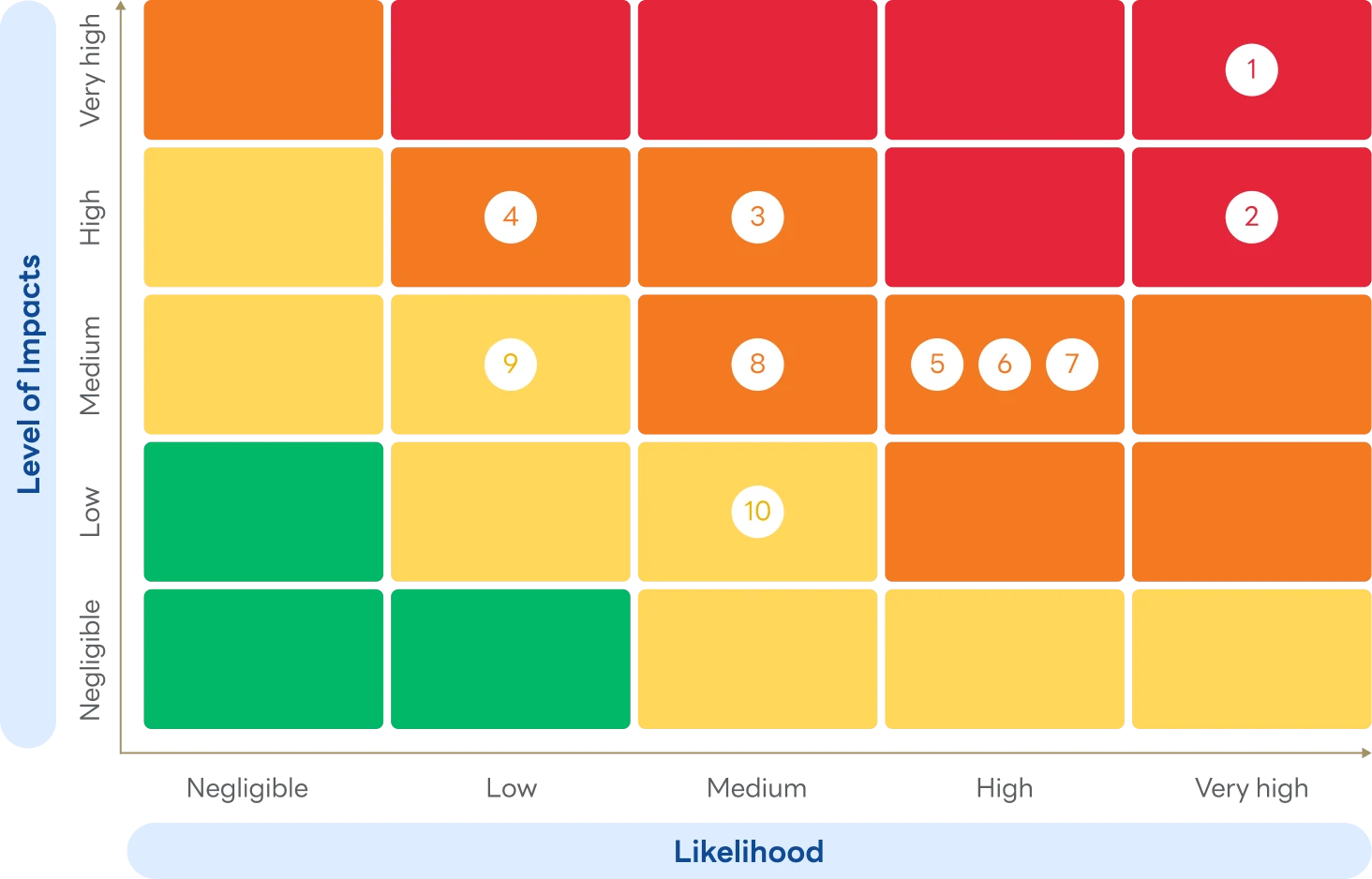
In the "DOUBLE MATERIALITY" assessment, BEM integrated impact analysis and enterprise risk management as a tool for evaluating impact from an inside-out perspective, which comprises five factors, namely

Finance

Operation

Strategic

Reputational

Regulatory
The Company assessed both the severity and likelihood of each material issue. Then, the material topics that were identified as "Essential" through to "Value Creation" were prioritized and placed into the relationship matrix by senior executives.
-
1Health and Safety
-
2Human Capital Development
-
3IT Security and Data Privacy
-
4Innovation
-
5Supply Chain Management
-
6Energy Management and Climate Change
-
7Environmental Management
-
8Corporate Social Responsibility
-
9Corporate Governance
-
10Customer Relationship Management
To consider material topics in business operations from a dual perspective, or "Double Materiality", BEM made calculations by weighting the environmental and social impact assessment results and the impact on the organization in order to rank the assessment results and obtain the Company's material topics.
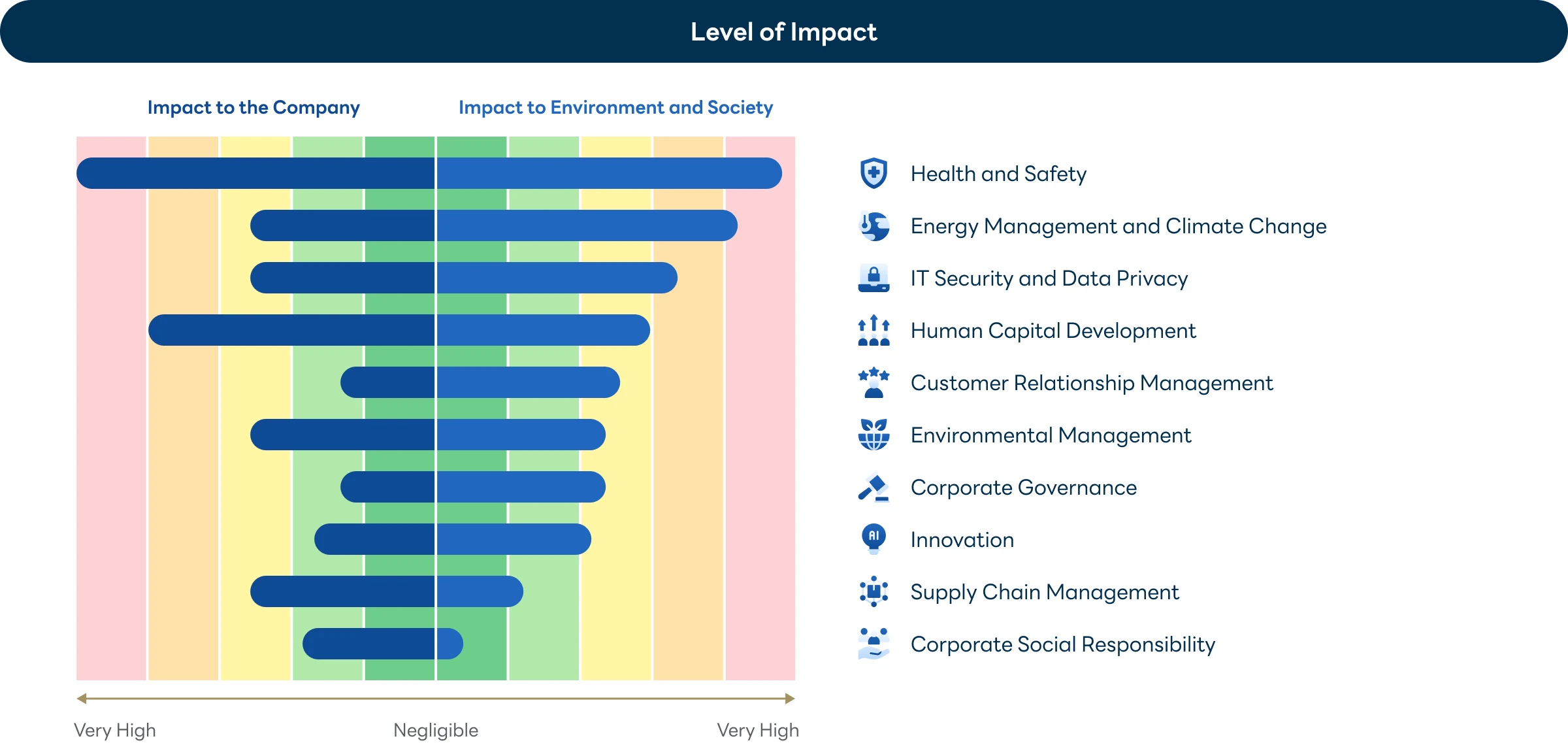
Based on the assessment result, 4 of a total of 14 material topics were identified under the Value Creation category, namely Health and Safety, Human Capital Development, Energy Management and Climate Change, and IT Security and Data Privacy.
BEM's efforts to drive material sustainability topics have contributed to supporting all three dimensions of the Sustainable Development Goals (SDGs), namely Environmental, Social, and Corporate Governance & Economic. The Company has rendered the its support to 13 of the 17 SDGs through 10 material topics and four fundamental topics in the Company's business operations.
Table Showing the Impact Level on Each Material Topic During 2023 - 2026
| Impact Level | Material Topic | Sustainable Development Goals |
|---|---|---|
| Value Creation | Health and Safety |
   |
| Human Capital Development |
   |
|
| Energy Management and Climate Change |
  |
|
| IT Security and Data Privacy |
  |
|
| Enabler | Environmental Management |
  |
| Essential | Corporate Governance |
|
| Innovation |
|
|
| Customer Relationship Management |
|
|
| Corporate Social Responsibility |
 |
|
| Supply Chain Management |
|
|
| Fundamental/Foundation | Risk and Crisis Management |
|
| Biodiversity |
|
|
| Stakeholder Engagement |
|
|
| Human Rights |
|
Materiality Review
BEM places great emphasis on the process of prioritizing sustainability topics that are material to the Company's operations and stakeholders.
Accordingly, the Company requires that a materiality assessment be performed every three years and presented to the management for approval of the material topics. This allows the Company to better understand sustainability topics that may occur or change according to the situation or time. Such an effort also enables the Company to establish guidelines for driving material topics that reduce risks and increase opportunities within and beyond the organization.