

Stakeholder Engagement

Goal 8:

Goal 16:
Management Guidelines and Practices
Stakeholders' issues of interest are the main factors used to improve and develop the Company's operational efficiency.
The Company therefore places importance on such issues and established the Stakeholder Engagement Policy and Practices as part of the Corporate Governance Principles. The Stakeholder Engagement Policy and Practices require that expectations, engagement approaches and channels, policies and measures in response to stakeholder expectations are reviewed on an annual basis to enable cooperation in promoting mutual benefits for all stakeholders and in engaging stakeholders who may be affected by the Company's operations. This also ensures that the Company has provided opportunities for all groups of stakeholders to participate and express their opinions in a transparent and appropriate manner.
In this regard, the Company has established a structured process for stakeholder identification and prioritization, which is reviewed every three years or whenever significant changes affecting the Company's business operations occur, with the next review scheduled for 2026. Stakeholder identification and prioritization are carried out in accordance with the AA1000 Stakeholder Engagement Standard (AA1000SES), ensuring that the stakeholder engagement process remains comprehensive, transparent, and aligned with internationally recognized best practices.
Impact on Business and Stakeholders








Stakeholder engagement is a key process that may affect the BEM's relationship with stakeholders and business operations. Therefore, it is imperative to manage business in a way that is inclusive to stakeholders by identifying and mitigating problems in the earliest stages to improve services and gain the license to operate from stakeholders. Inefficient stakeholder engagement and not meeting their expectations may cause higher management costs and delays, affecting overall stakeholder satisfaction and sparking other conflicts. This may produce a negative impact on reputation and confidence that can affect investment decision of creditors, shareholders, regulatory authorities and public sector. It will also affect the fulfilment of financial obligations, thus posing potential risks to creditors and long-term operations.

Commitment, Challenges and Opportunities
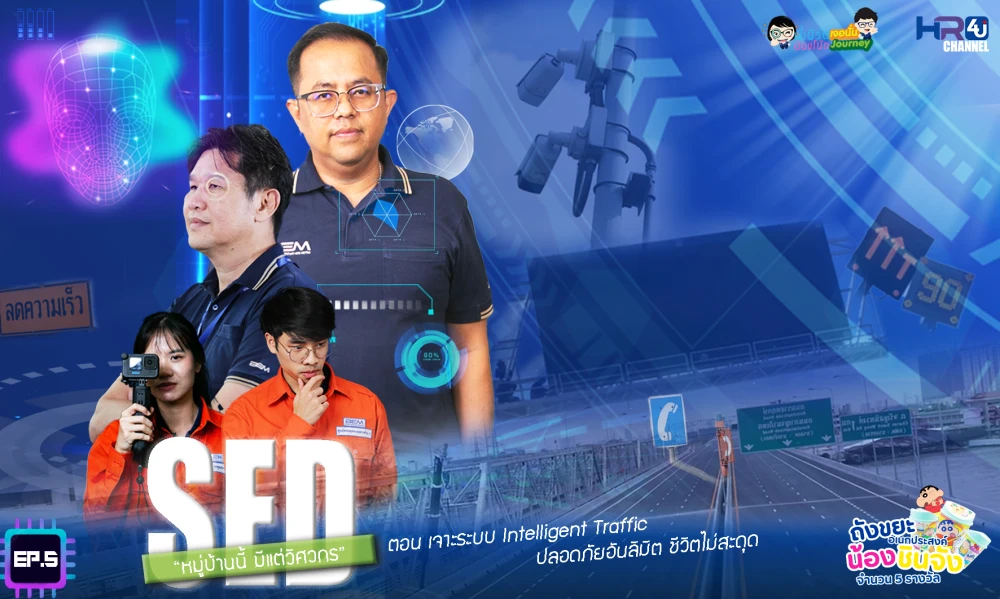
Stakeholder engagement in the transportation sector can unlock opportunities for innovation and sustainable practices for the society.
Therefore, BEM is committed to establishing good relationships with stakeholders throughout the business value chain and strives to conduct business with accountability, fairness, and social and environmental responsibility in line with the Company's Code of Conduct. The Company permits stakeholders to take part in decision-making and discloses up-to-date information on a regular basis. It implements guidelines for managing stakeholders according to their legal rights and ensures that stakeholder rights are not violated. Compensation measures have been defined to support cases where stakeholders are damaged by violation of rights. Furthermore, the Company manages needs and expectations while focusing on respect for human rights in its operations. The Company continues to explore means of enhancing relationships with stakeholders by seizing the opportunity to promote positive impacts on operations and engagement, deal with challenges, and continually maintain commitments to stakeholders.
Policy and Practices
BEM has enacted its Stakeholder Engagement policy and practices to safeguard the legal rights of all stakeholders, firmly committing to the non-violation of rights while establishing clear remediation and compensation measures for any damages resulting from rights violations. Furthermore, operating on the foundation of respect for human rights, the Company strives to strengthen relationships with stakeholders and promote positive impacts on corporate operations. The policy and practices related to stakeholder engagement are outlined in the Corporate Governance Manual and published on the corporate website. On an annual basis, the Company reviews stakeholder expectations, communication formats, and engagement channels, alongside related policies and measures. The Company also monitors the sustainability progress and reports results to the Corporate Governance, Risk Management, and Sustainable Development Committee at least once a year, ensuring continuous improvement and alignment with long-term sustainability objectives.
Stakeholder Identification and Prioritization Process
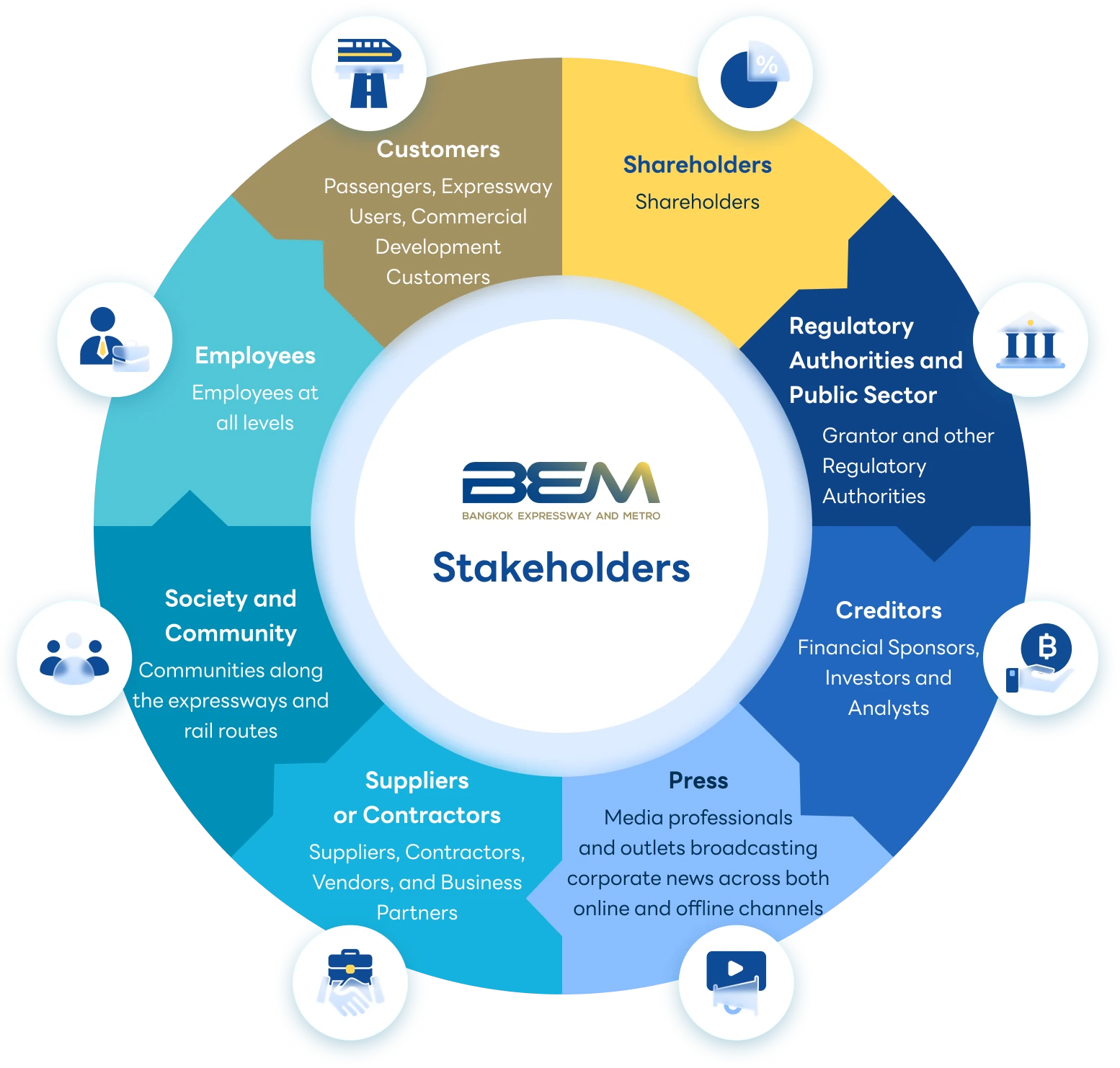
BEM conducts its stakeholder identification process by taking into account individual stakeholders and groups who are both positively and negatively affected by corporate operations. This process aligns with the operating principles of the AA1000 Stakeholder Engagement Standard (AA1000SES), which considers stakeholders based on the nature of their engagement with the Company, such as dependency, responsibility, tension, influence, and perspectives.
In addition, BEM implements a risk management process tailored to each stakeholder group in accordance with international principles and standards by establishing preventive guidelines, operational frameworks, and resource allocation to effectively mitigate potential impacts across all stakeholder segments.

Prioritization
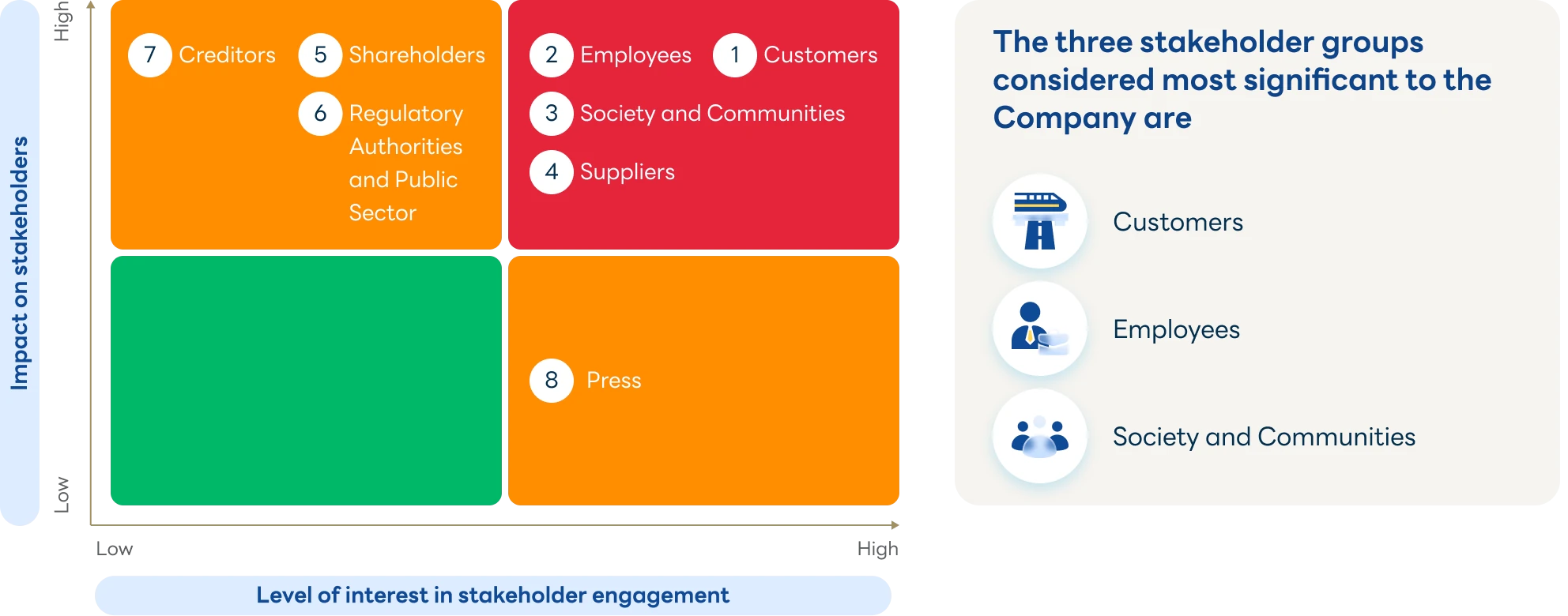
BEM has established criteria to analyze and prioritize stakeholders, focusing on the level of stakeholder interest in engagement alongside the scale of corporate operational impacts on each stakeholder group.
The top three prioritized stakeholder groups are Customers, Employees, and Society and Communities.
Customers are at the core of corporate business operations. Customer satisfaction, positive experiences, and maintaining strong relationships with customers are essential to strengthening competitive advantage, enhancing long-term corporate reputation, mitigating potential complaints and dissatisfaction that may arise from service use, and encouraging positive word-of-mouth alongside continuous service utilization.
Employees are primary and vital stakeholders of BEM. A lack of strong employee relations can cause workforce discouragement and a loss of morale when facing occupational pressures, ultimately leading to operational inefficiencies and increased voluntary turnover. Conversely, when robust workplace relationships are nurtured, employee morale and dedication are enhanced. Personnel demonstrate greater commitment, proactively mitigate potential operational risks, and willingly resolve challenges, thereby optimizing overall corporate efficiency.
BEM’s businesses encompass the provision of transportation services through expressway and rail networks, which are deeply interconnected with society and local communities across many areas. The Company therefore places importance on continuously listening to community feedback, maintaining communication, and promoting community engagement to foster mutual trust and understanding, while minimizing potential impacts arising from corporate operations. This structured approach to community relations management and responsive grievance resolution ensures smooth and sustainable operations. Conversely, failing to maintain these vital relationships risks compromising stakeholder confidence and long-term business continuity.
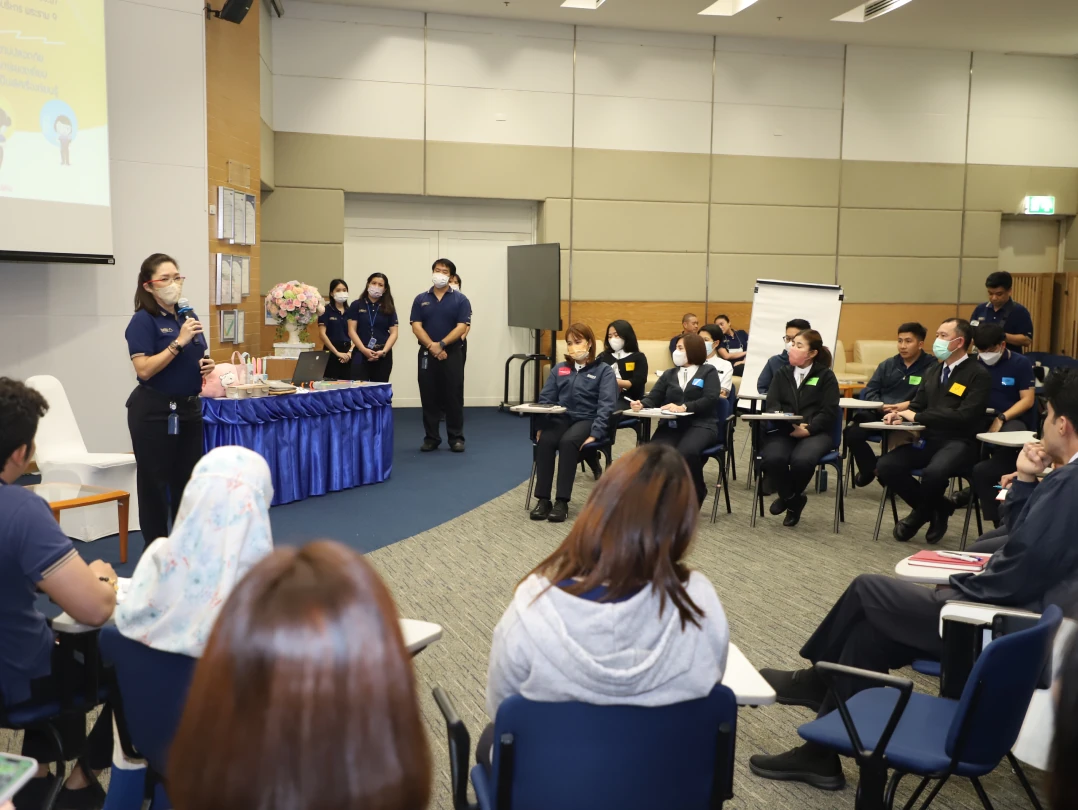
Fostering a Culture of Engagement for Corporate Sustainability
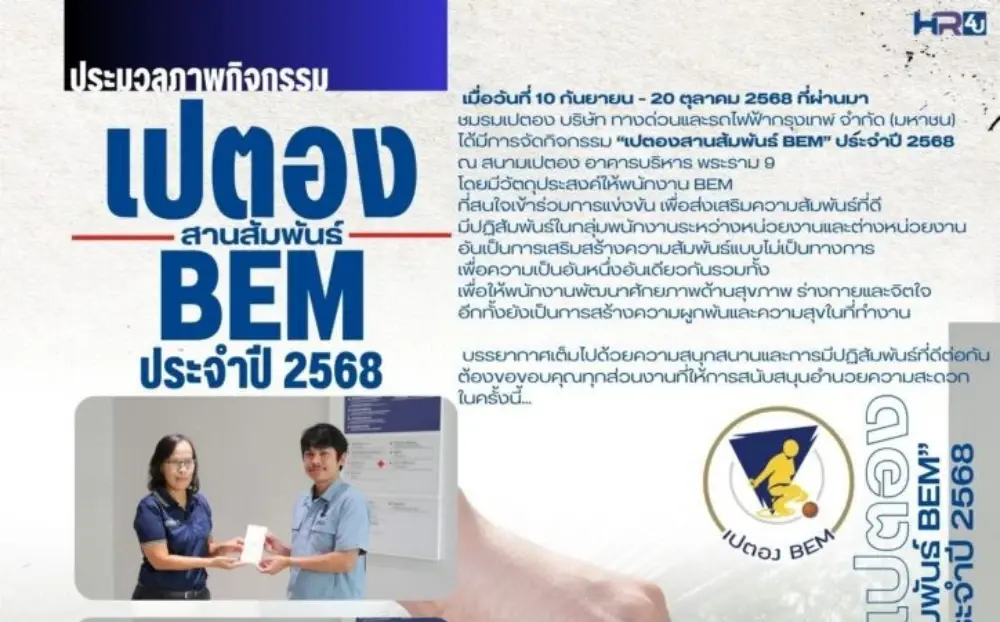
BEM firmly believes that employees are its most valuable resources and a vital stakeholder group driving the organization toward long-term sustainability. Therefore, the Company promotes employee participation by encouraging staff to propose sustainability concepts and operational guidelines through corporate culture initiatives, with the iCulture Team coordinating and supporting culture-building projects.
Additionally, BEM provides opportunities for employees to communicate suggestions or opinions directly to executives through the @Work application, driving collective and sustainable organizational development. The Company also regularly communicates and reinforces its corporate culture through the “S A C T L Talk by Leader” program. This initiative cascades cultural insights from executives to supervisors, emphasizing the importance of BEM Culture while fostering communication, active encouragement, and behavioral role-modeling across all levels. This aligns employee performance with corporate values, cultivating a positive, joyful working environment and enhancing the corporate image.

Stakeholder Engagement
BEM has assigned the Sustainability Development Department, which reports directly to the Deputy Managing Director for Business Development and Expressway Operations, as the primary unit responsible for stakeholder engagement. This department coordinates with relevant internal departments associated with the Company’s eight stakeholder groups in accordance with the Stakeholder Engagement Policy, providing opportunities for all stakeholder groups to appropriately communicate and share their feedback with the Company. This enables the Company to deliver services and respond to diverse expectations. Engagement approaches vary, ranging from informal discussions, meetings, and seminars to evaluation surveys and questionnaires. If stakeholders wish to contact the Company or submit complaints, they may reach out via the MRT Information Service Center at 02-624-5200, or through the Sustainability Development Department at SDD@bemplc.co.th or the Company Secretary at companysecretary@bemplc.co.th All received comments and suggestions will be reported to the Corporate Governance, Risk Management, and Sustainable Development Committee for its acknowledgement and to guide operational improvements, with meetings held on an annual basis.

BEM prioritizes strategic stakeholder engagement planning that integrated with its business value chain and material sustainability issues. Effective engagement not only fosters mutual understanding and social license to operate but also solidifies the Company’s credibility, transparency, and fairness, guiding its development and operations toward a sustainable direction.
Sustainability reporting on material topics, such as efficient energy consumption, GHG emissions mitigation, or environmental management, serves as a vital communication mechanism. This disclosure helps stakeholders recognize the Company’s dedication to operating in a socially and environmentally responsible manner.
Additionally, BEM implements outstanding initiatives and flagship projects designed to foster strong relationships. By collaborating closely with each stakeholder group, the Company co-drives actions aligned with its key sustainability agendas, thereby continuously enhancing transparent communication and building long-term stakeholder trust.
| Material Sustainability Topics | Key Stakeholder Groups | |||||||
|---|---|---|---|---|---|---|---|---|
| Employees | Suppliers or Contractors | Customers | Society and Communities | Creditors | Shareholders | Press | Regulatory Authorities and Public Sector | |
| B: Business Excellence and Ethics | ||||||||
| Corporate Governance | ||||||||
| Risk and Crisis Management | ||||||||
| IT Security and Data Privacy | ||||||||
| Supply Chain Management | ||||||||
| Innovation | ||||||||
| Customer Relationship Management | ||||||||
| E: Eco-Friendly Commute | ||||||||
| Energy Management and Climate Change | ||||||||
| Environmental Management | ||||||||
| Biodiversity | ||||||||
| M: Metropolitan Social Harmony | ||||||||
| Health and Safety | ||||||||
| Human Capital Development | ||||||||
| Corporate Social Responsibility | ||||||||
| Stakeholder Engagement | ||||||||
| Human Rights | ||||||||