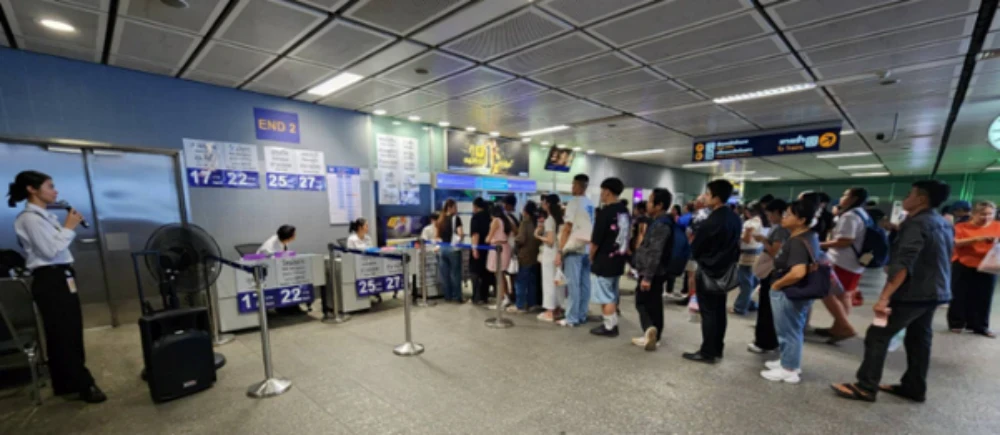


Service Quality and Standards


Goal 8:

Goal 11:
Management Approach and Practices
BEM’s primary mission is to provide public transportation services, thus the Company is highly aware of the importance of service quality.
Quality service is defined as the ability to meet the needs or expectations of users, ensuring they reach their destinations safely, conveniently, rapidly, and reliably, which is essential and crucial, as well as to improve the quality of people’s lives in reaching their desired destinations, the Company adheres to international standards of service quality and continually strives to improve its services.
Business and Stakeholder Impact



Policy and Practices
BEM has established a Quality Policy and stakeholder engagement practices specifically for customer groups. The policy and practices serve as guidelines for employees in delivery services, and build effective and sustainable customer relationships.
Service Quality Management
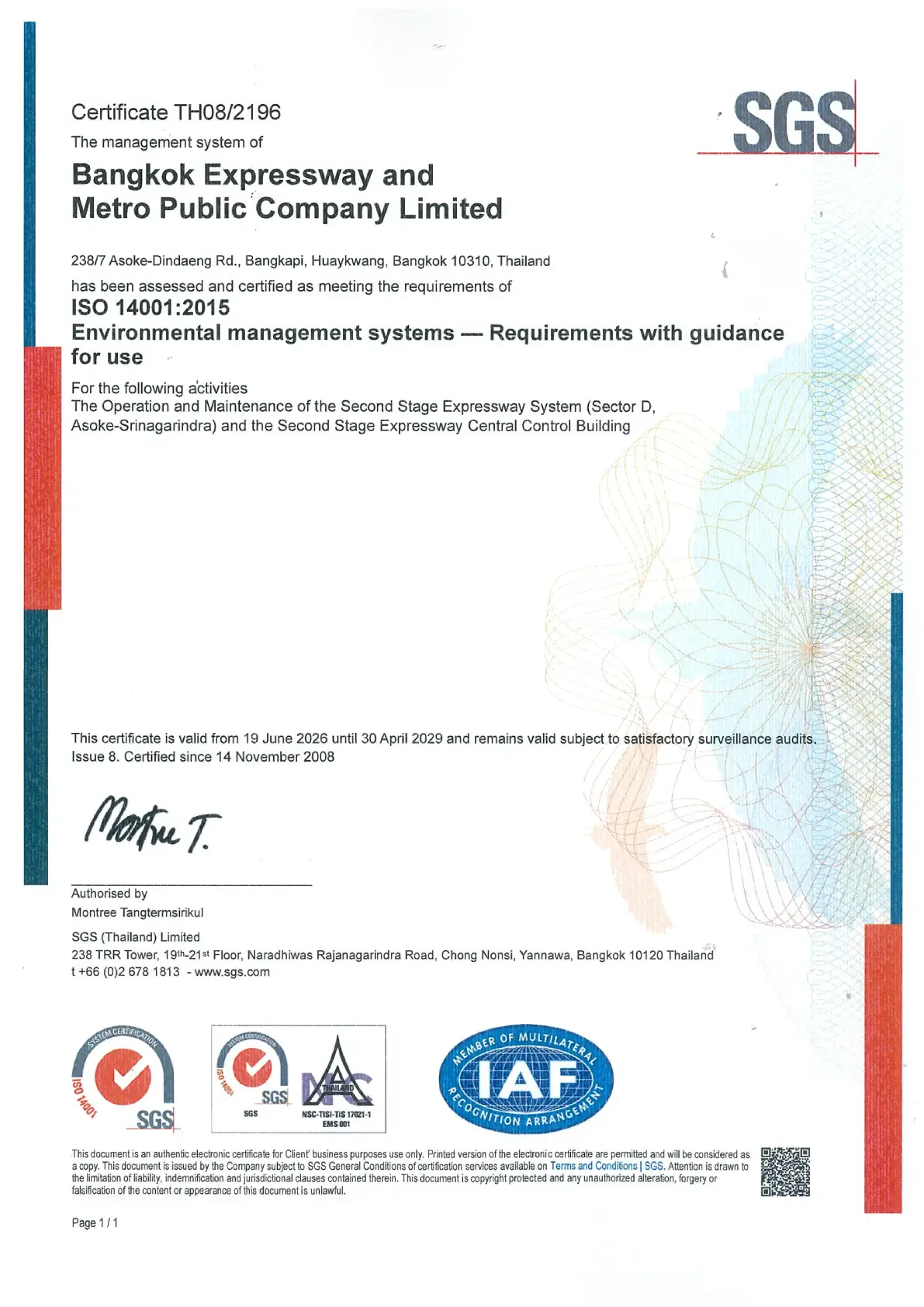
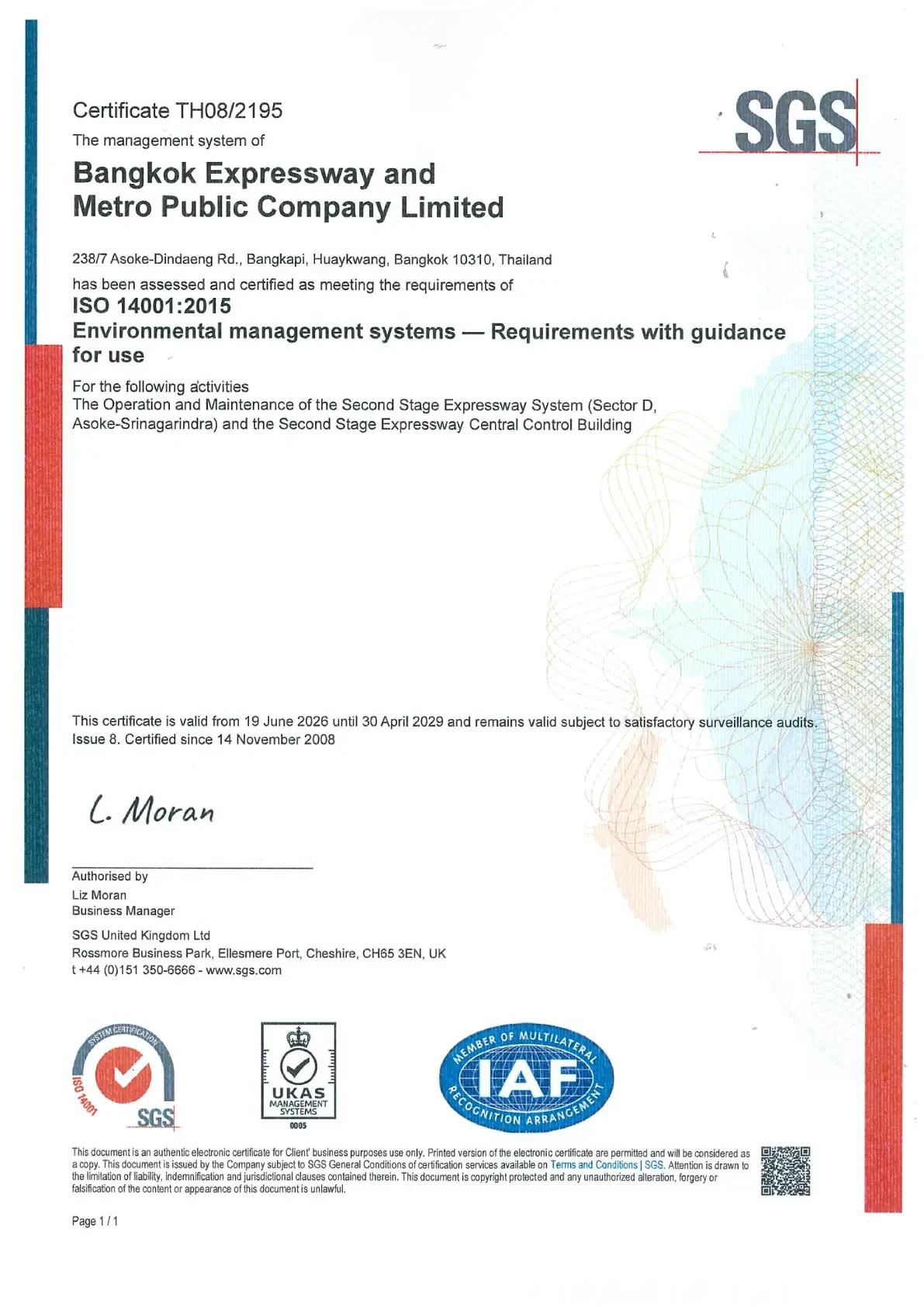
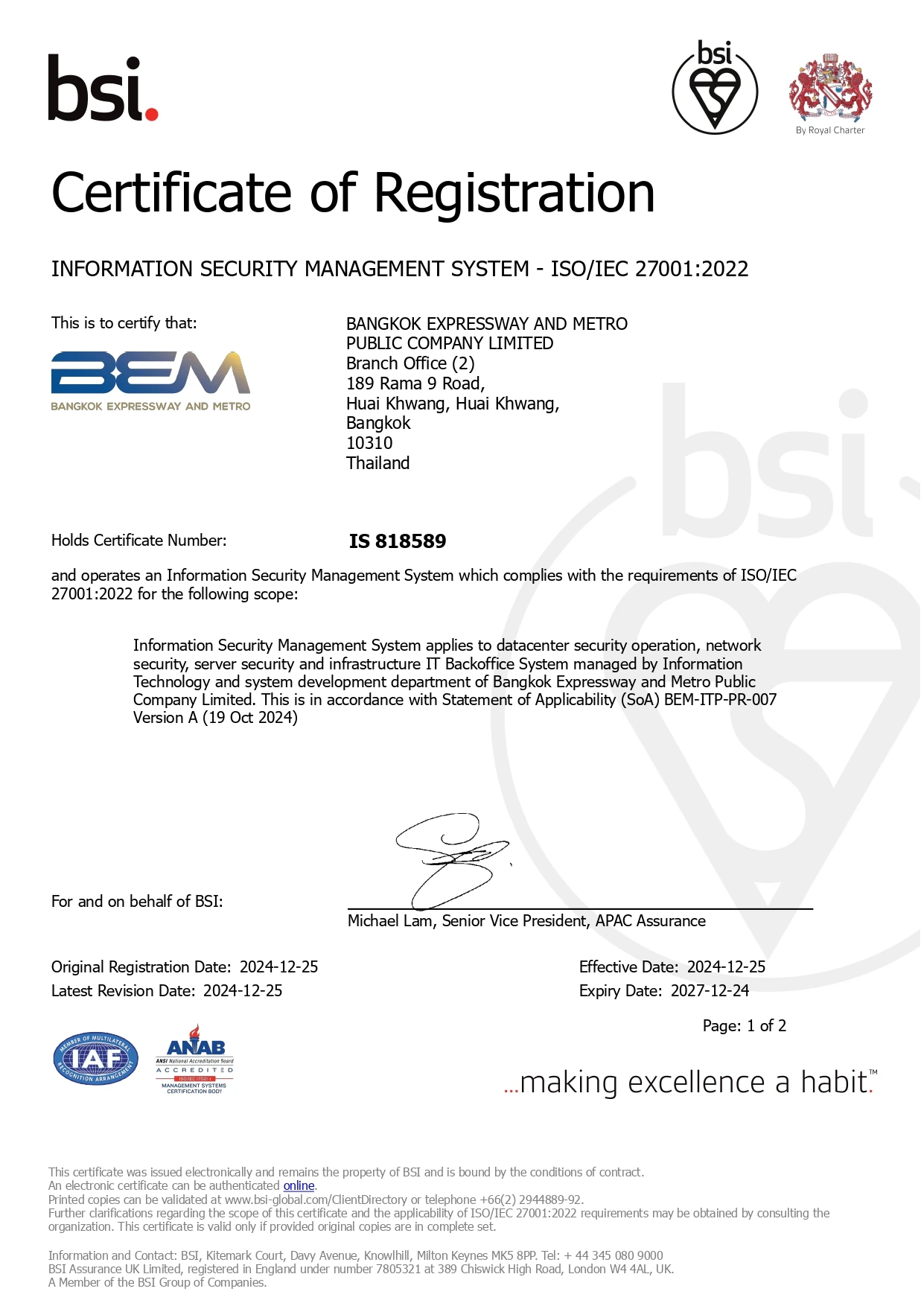
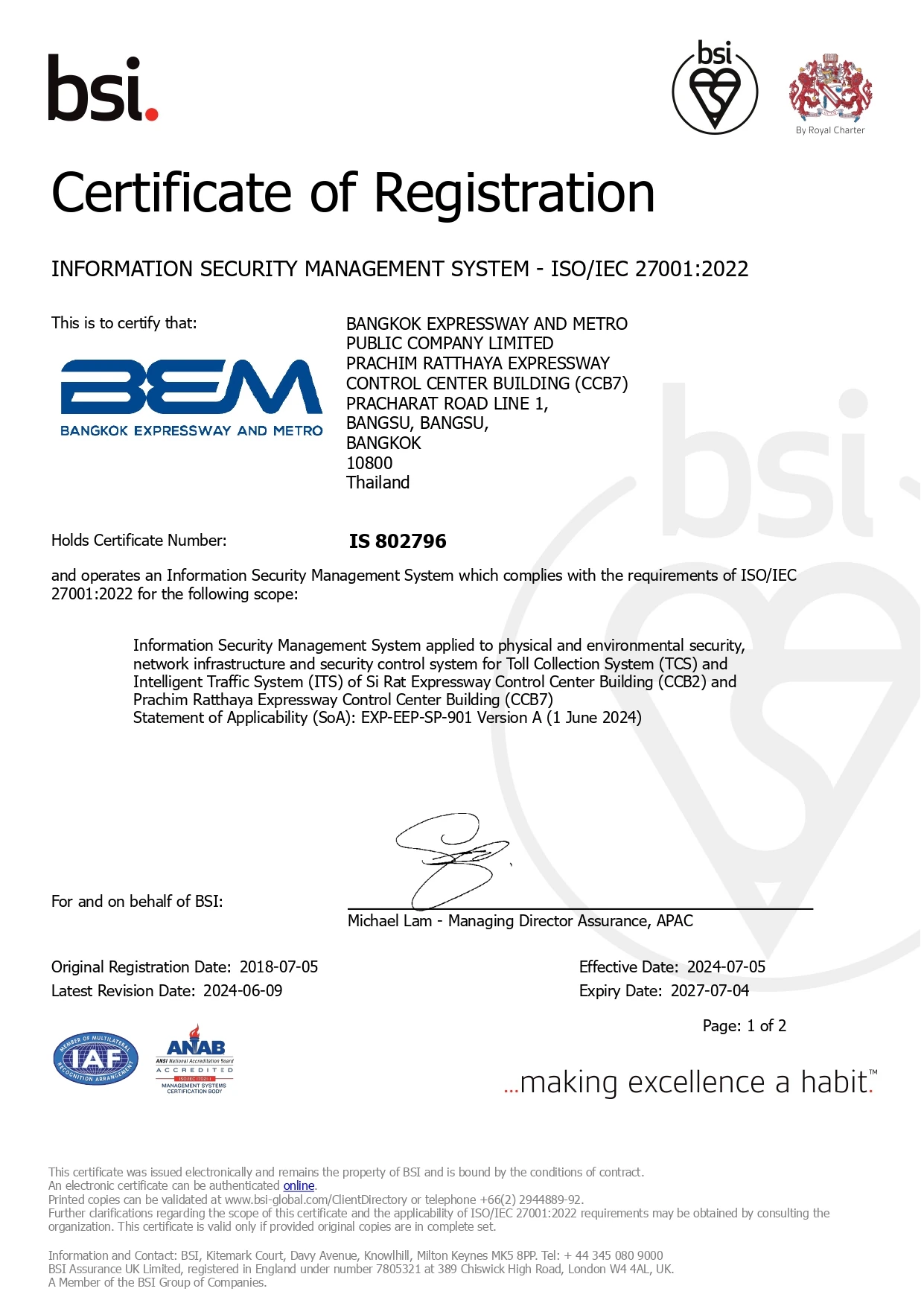
BEM’s primary core mission is to provide mass transit services, recognizing the importance of service quality in meeting customer needs and expectations. The goal is to ensure safe, convenient, rapid, reliable and punctual, ultimately enhancing the quality of life for the public. The Company is committed to maintaining service quality in accordance with international standards and continuously improving its services. To demonstrate this commitment, the Company has established policies focused on the continuous improvement of operational processes and service quality. These policies cover service quality development for customers, operational efficiency, and the goal of becoming one of the world’s leading mass transit service providers. The Company is certified under ISO 9001, ISO 45001, ISO 14001, and ISO 27001 standards and has appointed a Quality Management System Committee responsible for approving the Company’s quality policy and quality management framework. The management team, including the safety and quality group and other related work units, is responsible for implementing quality management processes, monitoring performance, evaluating results, and reporting to the Company’s Board of Directors on a quarterly basis.
Quality Management
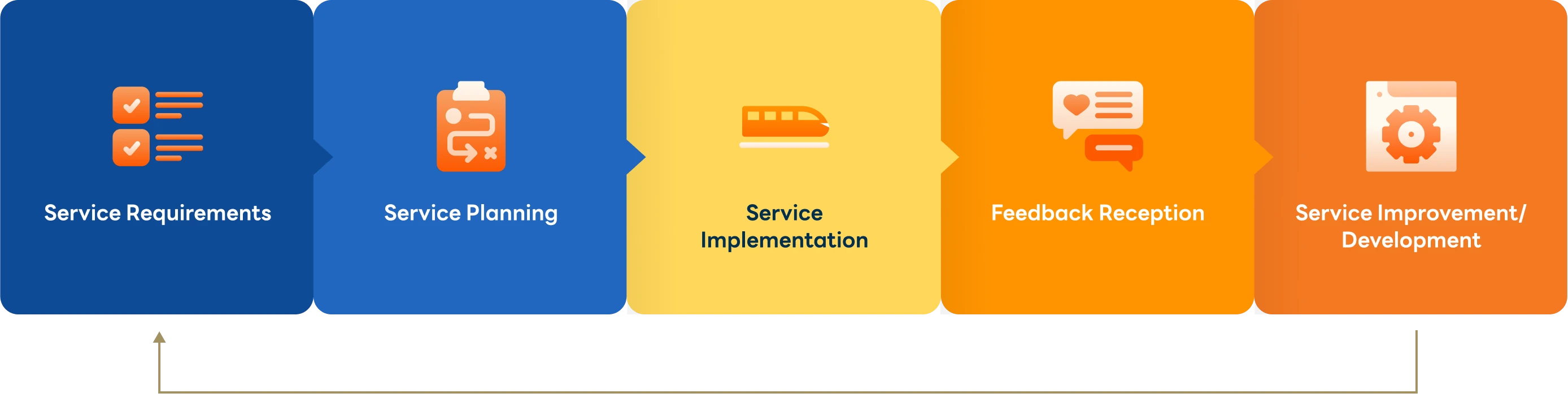
BEM’s quality management is divided into two processes: the core processes and the support processes.
Core Processes

Establishing Service Requirements

Service Planning

Implementation

Gathering Feedback from Expressway Users, Passengers, and Commercial Customers

Improvement and Development Service
Support Processes

Resources

Personnel

Infrastructure

Environment

Inspection and Measurement

Organizational Knowledge

Capability

Awareness

Communication
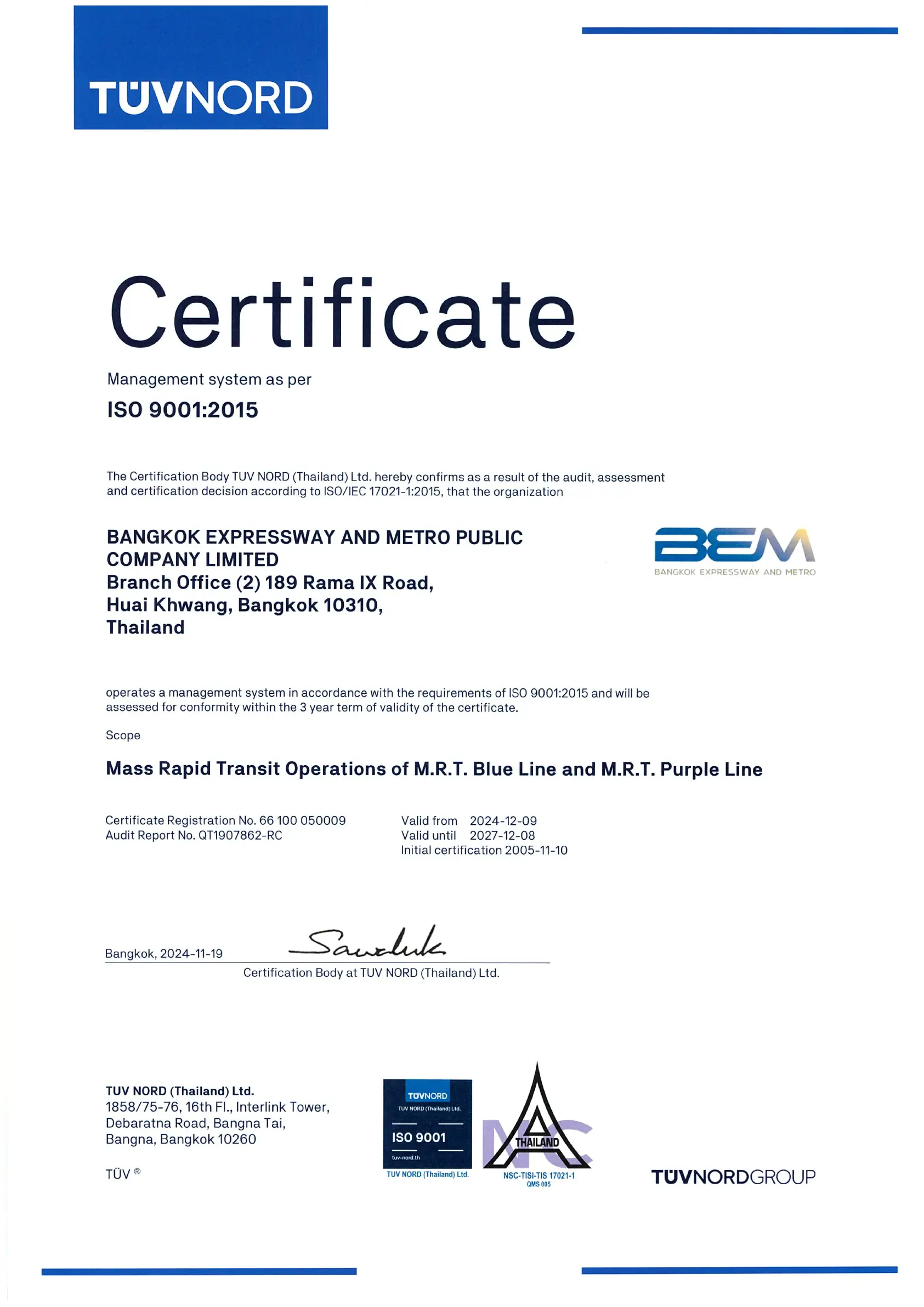
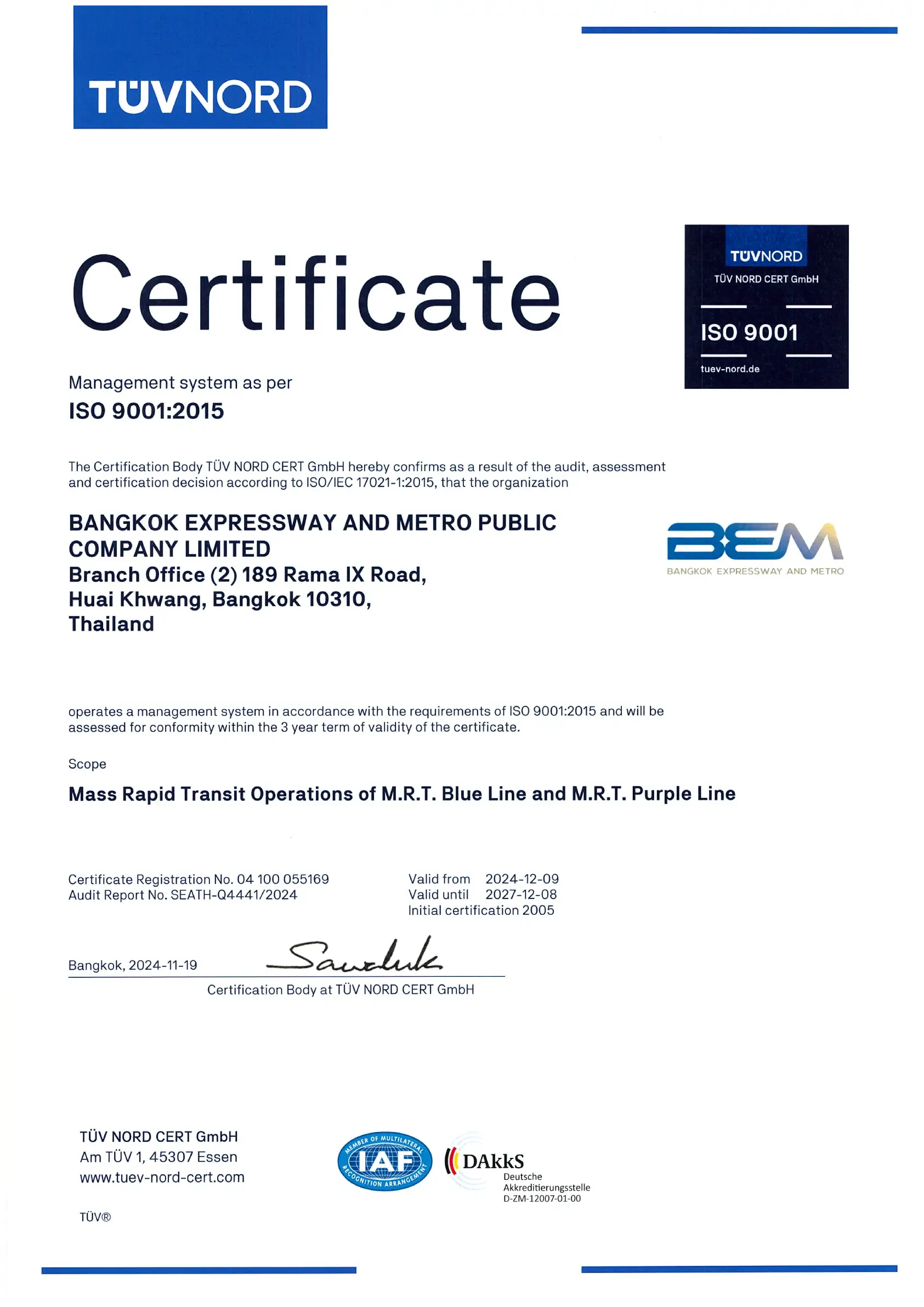
The Company places importance on compliance with relevant laws and requirements and is committed to continuously improving work processes and service quality to achieve the Company’s vision, mission, and quality policy. The Company is certified under the following management standards.
Rail Business
Expressway Business
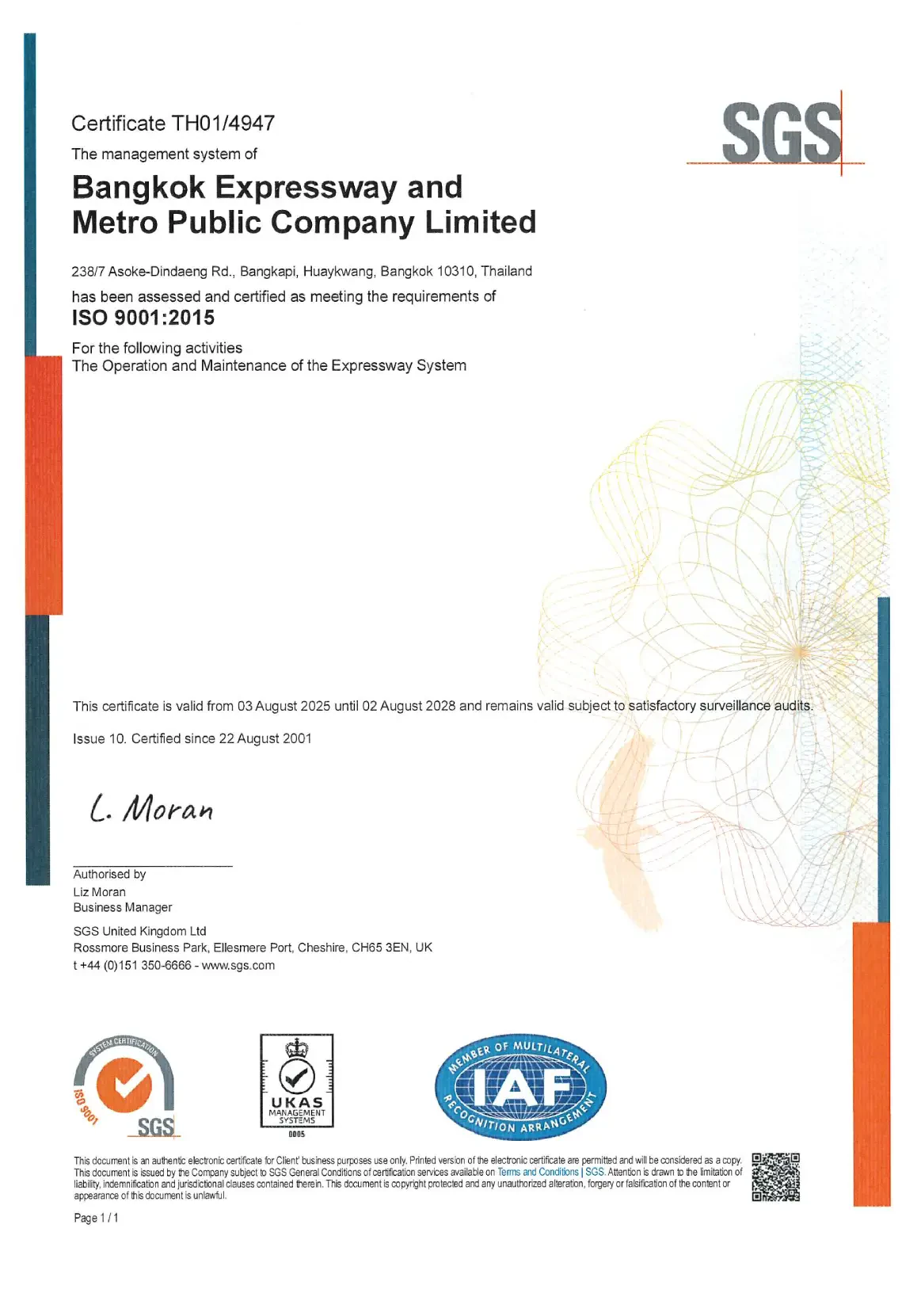
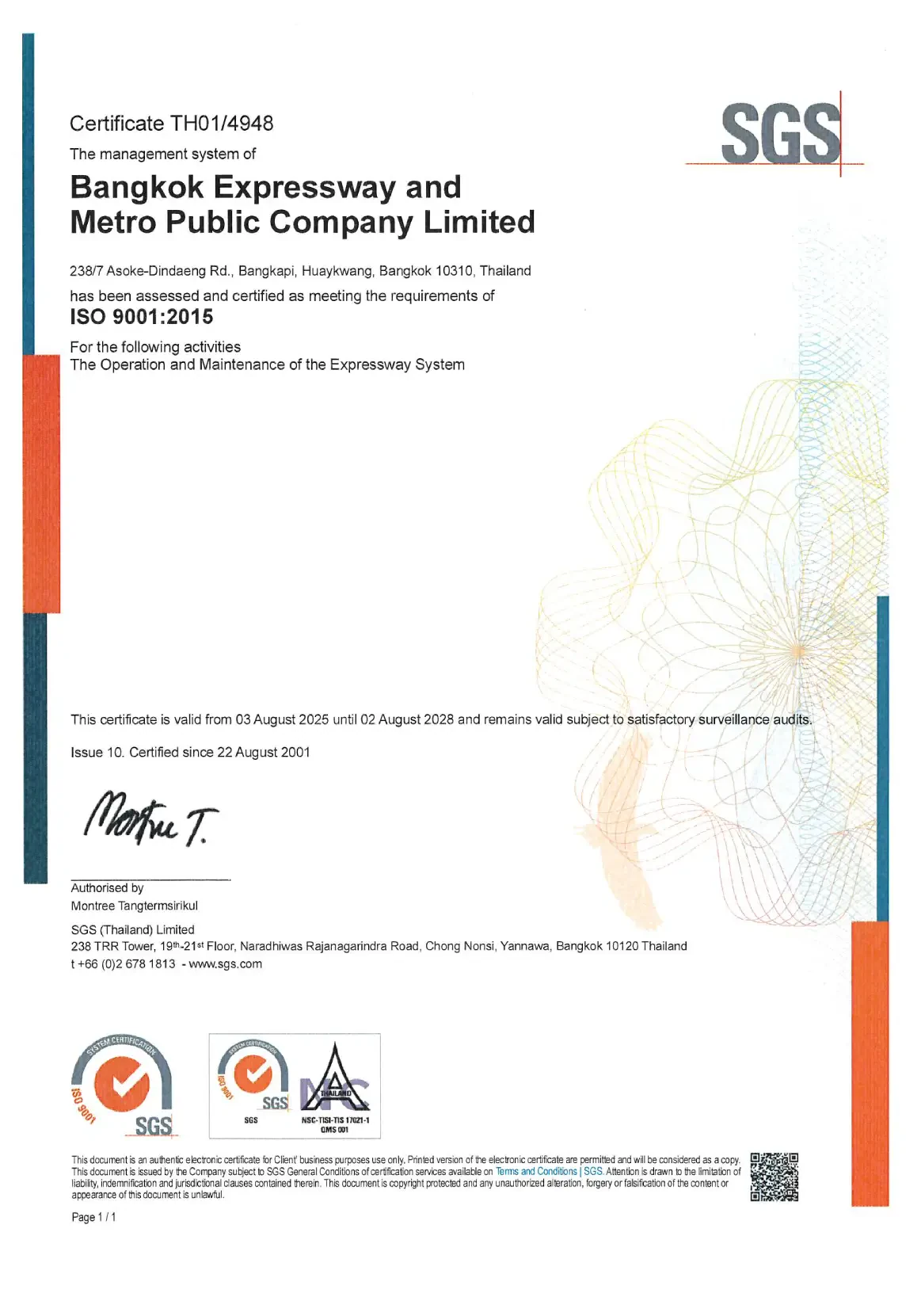
Rail Business
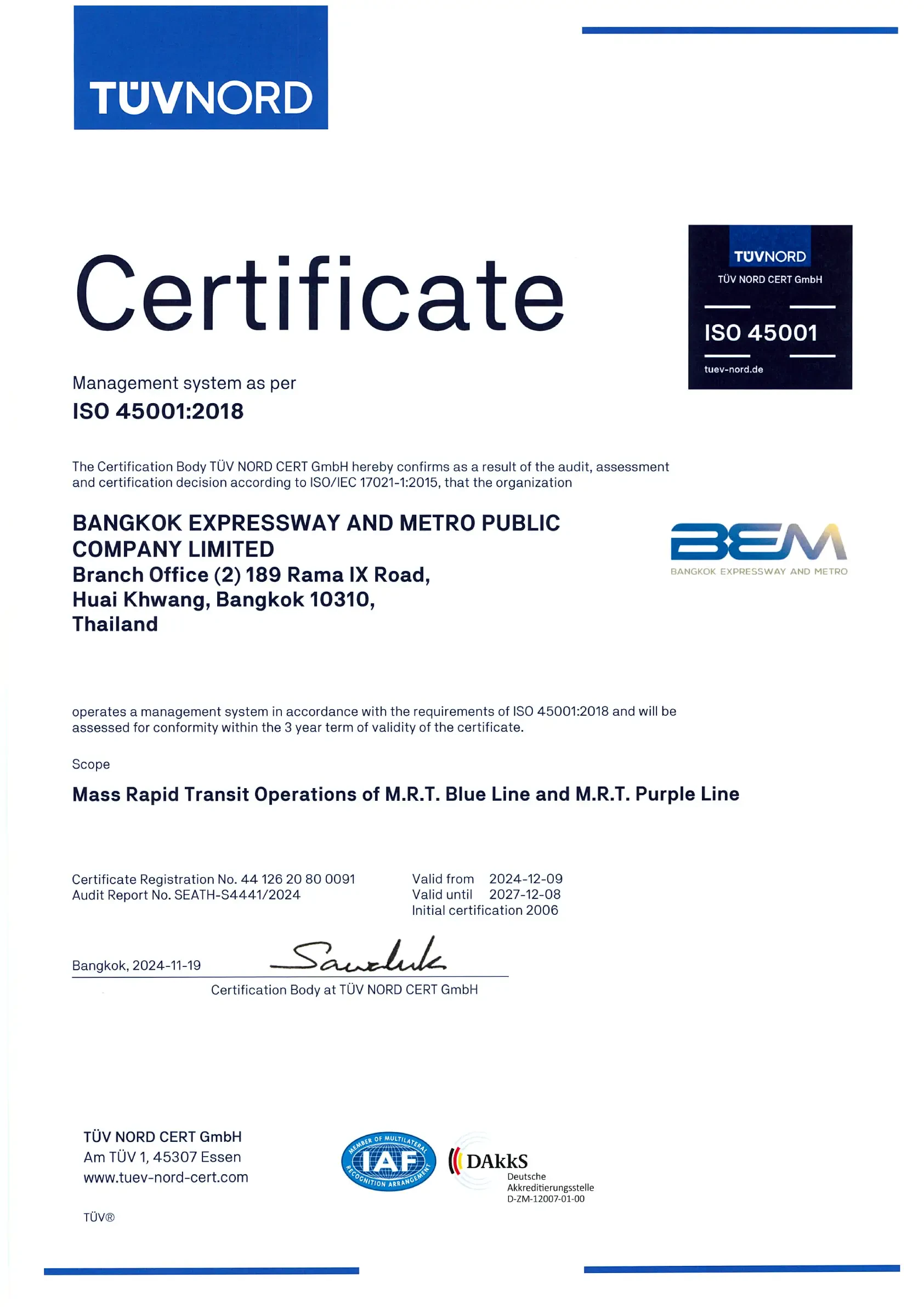
Rail Business
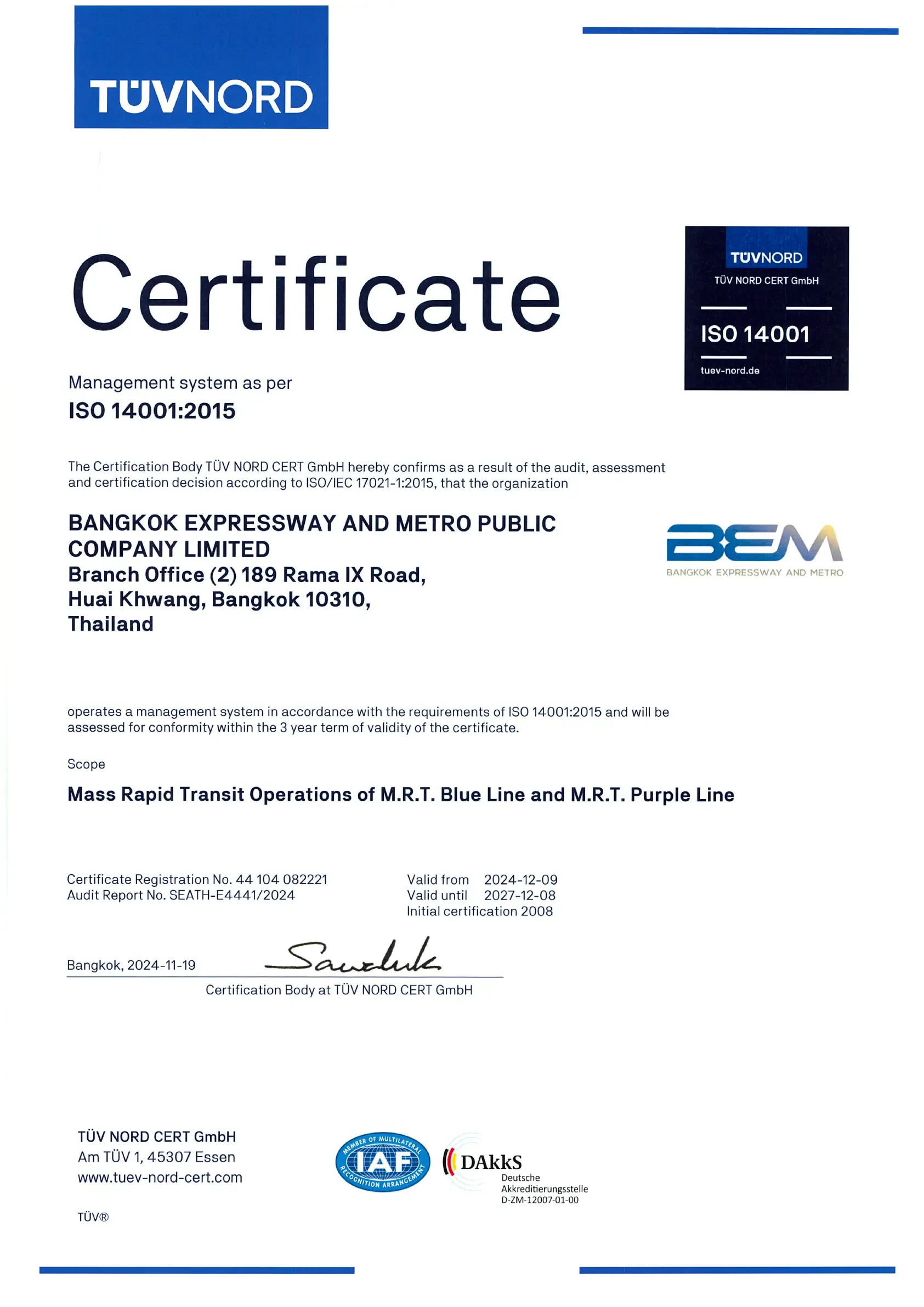
Expressway Business
Rail Business
Expressway Business

BEM received customer complaints across its respective business units in 2025, categorized as follows:

Expressway Business: A total of 46 cases, comprising Safety (16 cases or 35%), Staff (6 cases or 13%), Equipment (10 cases or 22%), Environment (9 cases or 20%), Surrounding Communities (3 cases or 6%), and Others (2 cases or 4%).
Rail Business: A total of 497 cases, comprising Staff (295 cases or 59%), Equipment (98 cases or 20%), and Operations and Management Methods (104 cases or 21%).
Commercial Development Business: A total of 18 cases, comprising Safety (1 case or 6%), Equipment (2 cases or 11%), Staff (2 cases or 11%), and Others (13 cases or 72%).
BEM reviewed and handled all received complaints as appropriate, and resolved 100% of complaints received. Notable examples include feedback from expressway users regarding traffic lane arrangements at Si Saman Toll Plaza, which indicated insufficient Easy Pass lanes on both inbound and outbound sides. Users suggested adding more Easy Pass lanes to accommodate the growing volume of automated system users and improve traffic flow. In response, the Company has continuously develop plans to increase Easy Pass lanes to enhance convenience and improve service quality for expressway users
BEM’s core mission is to provide mass transit services, recognizing the importance of service quality in meeting customer needs and expectations. The goal is to ensure safe, convenient, rapid, reliable and punctual, ultimately enhancing the quality of life for the public. The Company is committed to maintaining service quality in accordance with international standards and continuously improving its services. To demonstrate this commitment, the Company has established policies focused on the continuous improvement of operational processes and service quality. These policies cover service quality development for customers, operational efficiency, and the goal of becoming one of the world’s leading mass transit service providers. The Company is certified under ISO 9001, ISO 45001, ISO 14001, and ISO 27001standards and has appointed a Quality Management System Committee responsible for approving the Company’s quality policy and quality management