

Supply Chain Management

Goal 8:
Goal 12:

Goal 16:
Management Guidelines and Practices
BEM has established the Supply Chain Management Policy and Strategy
and assigned the Corporate Governance, Risk Management and Sustainable Development Committee to establish the Supplier Code of Conduct, monitor performance and formulate procurement regulations with clearly defined criteria.
Impact on Business and Stakeholders

BEM is committed to developing a supply chain and procurement process that considers sustainability risks, such as violation of human rights, business ethics misconduct, and environmental impact, etc., to enable the identification of high-risk suppliers and take appropriate corrective actions. This will prevent impacts from such risks on the Company's service provision and the stakeholders. It also strengthens participation with suppliers and business partners to keep the Company's products and services in line with quality and sustainability standards as well as maintain good long-term relationships.

Commitment, Challenges and Opportunities
In order to create confidence and cater to the expectations of stakeholders,
BEM has defined the Supply Chain Management Strategy and promote sustainability in the supply chain to enable the delivery of quality, rapid and continuous services in accordance with stakeholders' expectations.

Targets and Performance Indicators

New suppliers acknowledge and comply with the Supplier Code of Conduct
Targets
2025 Performance

New suppliers passed sustainability screening criteria
Targets
2025 Performance

Significant Tier-1 Suppliers underwent a sustainability risk assessment through self-assessment
Targets
2025 Performance

Significant Tier-1 Suppliers underwent an on-site sustainability risk assessment by BEM personnel
Targets
2025 Performance

Tier-1 Suppliers underwent a sustainability risk assessment through self-assessment
Targets
2025 Performance

Supplier satisfaction
Targets
2025 Performance

Supplier payment period
Targets
2025 Performance
Policy and Practices
BEM has established the supply chain management policy, operational procedures, and Supplier Code of Conduct, covering environmental aspect, social, human rights and labor aspect, and business ethics aspect. These policy and practices serve as a framework for conducting business with the Company and encourage suppliers to operate ethically and responsibly toward society. They also provide guidelines for employees, suppliers, and contractors, aligning with the Company's commitment to corporate governance, social and environmental responsibilities, sustainability, thereby enhancing sustainability throughout the supply chain.
Supplier Management Process

Supplier Screening and Registration
- Register as a supplier via the online system
- Acknowledge the Company's key information and policies:
- BEM’s Code of Conduct
- Supplier Code of Conduct
- Anti-Corruption Policy
- Human Rights Policy
- Terms and Conditions for Data Disclosure Consent with BEM
- Complete self-assessment and pass sustainability criteria
- Submit required registration documents
- Timeframe: Throughout the year

Supplier Identification
- Assess the significance of suppliers to the Company, based on supplier spend in conjunction with other factors such as business expertise, strategic relationships, and geographical risks
- Timeframe: Review every 3 years or as appropriate

Supplier Assessment
- Assess supplier performance, covering sustainability aspects via two methods, namely:
- Desktop Assessment: This includes self-assessments, risk assessments by the Company’s employees, supplier pre-qualification screenings (prior to bidding), and performance evaluations (post-delivery of goods/services)
- On-Site Assessment: This involves evaluations through site visits at the suppliers’ facilities by the Company’s personnel; e.g., when assessment results indicate high-risk suppliers, or on-site visits to suppliers providing maintenance services and at supplier service centers
- Timeframe: Throughout the year

Supplier Development
- Organize supplier seminars to emphasize the Supplier Code of Conduct, demonstrate BEM's commitment, and invite suppliers to operate business with ESG responsibility in alignment with sustainable development guidelines
- Create public relations materials to educate suppliers about ESG twice a year
- Encourage suppliers to join the Thai Private Sector Collective Action against Corruption (CAC)
- Provide occupational safety training for suppliers
- Implement safety projects or activities in collaboration with suppliers

Supplier Screening and Registration
BEM's supplier management process begins with a sustainability risk assessment at the screening and registration stage. Suppliers are required to register via the online system and acknowledge the Company’s key information and policies, including BEM’s Code of Conduct, Supplier Code of Conduct, Anti-Corruption Policy, Human Rights Policy, and the Terms and Conditions for Data Disclosure Consent with the Company. Suppliers must also complete a self-assessment questionnaire covering operational performance, sustainability risks, and business capabilities such as operations, products and services, pricing, and delivery etc., as well as submit all required supplier registration supporting documents to the Company.
Sustainability Risk Assessment through Self-Assessment
BEM requires new suppliers to complete a self-assessment questionnaire to evaluate their products and services, as well as their sustainability performance across three aspects, as follows:

Environmental Aspect
- Environmental management
- Resource and energy consumption with consideration for environmental impacts, the use of environmentally friendly materials, greenhouse gas emission reduction, recycling, and efficient waste disposal
- Management of waste, chemicals, and hazardous substances

Social, Human Rights, and Labor Aspect
- Occupational health and safety
- Compliance with labor protection laws
- Working conditions and environment
- Emergency prevention, preparedness, and response
- Equitable treatment and non-discrimination
- Community engagement

Business Ethics Aspect
- Delivery of products and services
- Compliance with laws and regulations
- Anti-corruption and Anti-bribery
- Gifts and hospitality
- Conflicts of interest
- Commercial confidentiality
- Information disclosure
- Intellectual property rights
BEM requires that new suppliers achieve a minimum total score of 65% from the self-assessment in order to be registered in the Company’s Approved Vendor List (AVL).

In 2025


The Company had
Documentary Assessment
BEM verifies the credibility of suppliers and ensures that management practices take into account occupational health, safety, and environmental impacts, as well as the quality of products and services, prior to supplier registration approval. This evaluation is based on the verification of relevant information and documents including the Commercial Registration Certificate, Value Added Tax Registration Certificate (P.P. 20), and various standard certifications such as ISO 9001, ISO 14001, ISO 17001, ISO 45001, and ISO 50001, among others. The Company conducts document verification for all procurement transactions across all suppliers, categorized by the specific type of procurement scope executed.

2025 Procurement Value of Significant Tier-1 Suppliers
Supplier Identification
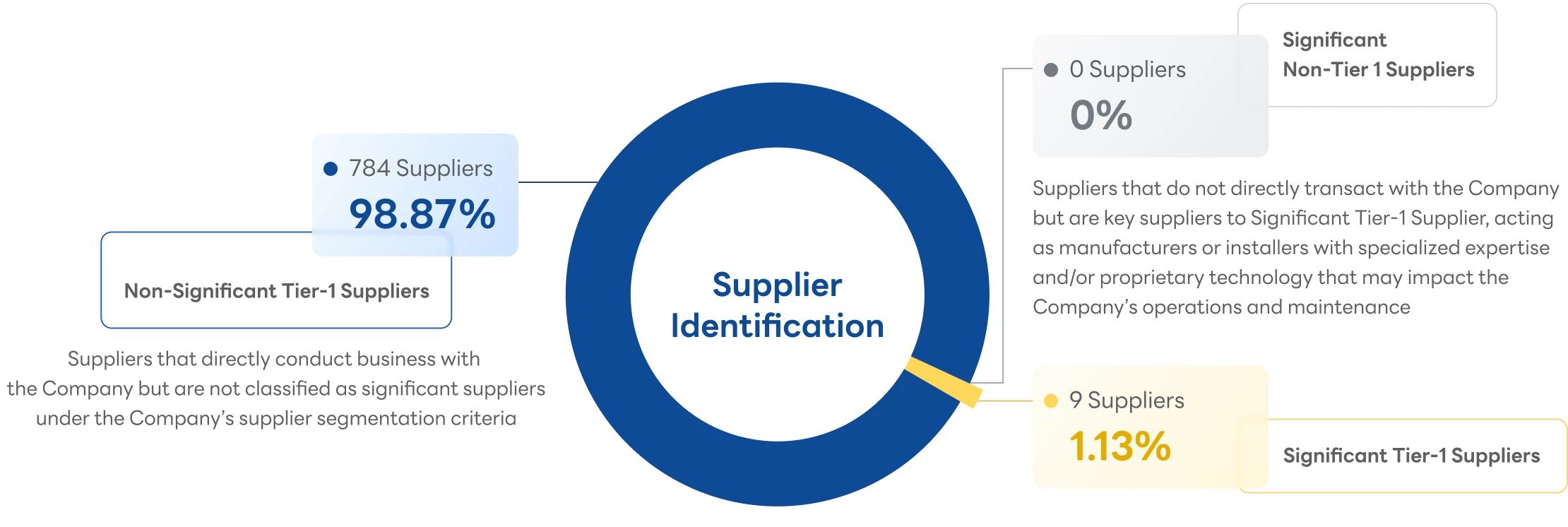
BEM classifies suppliers according to their level of significance to the business and their geographical risks. Suppliers are categorized into three types, namely Significant Tier-1 Suppliers, Non-Significant Tier-1 Suppliers, and Significant Non-Tier-1 Suppliers.
The most critical type of suppliers is identified as Significant Tier-1 Suppliers, the identification is considered based on various criteria, including high procurement value with the Company, technical expertise, involvement in critical business processes, strategic partnerships, and geographical risks.
BEM reviews its supplier classification criteria every 3 years. However, in the event of impactful issues, an early review may be considered as appropriate to ensure alignment with the changing business environment. In 2025, the Company maintained the existing criteria; consequently, 9 suppliers were classified as Significant Tier-1 Suppliers (representing 1.13%), 784 suppliers as Non-Significant Tier-1 Suppliers (representing 98.87%), and 0 suppliers as Significant Non-Tier-1 Suppliers (representing 0%).

Supplier Assessment
BEM regularly conducts assessments for suppliers to ensure their operations comply with the Supply Chain Management Policy and Supplier Code of Conduct. The supplier assessment guidelines are as follows:
Self-Assessment
BEM requires existing suppliers to conduct a sustainability risk self-assessment to evaluate their products and services, as well as their performance across all three sustainability dimensions, including environmental aspect, social, human rights and labor aspect, and business ethics aspect; aligning with the process for new suppliers. Based on the aforementioned ESG assessment criteria, existing registered suppliers must achieve a minimum sustainability score of 65% to maintain their status on the Company’s Approved Vendor List (AVL). This ensures that the supplier’s operations comply with the principles defined in the Supplier Code of Conduct. In cases where a supplier does not meet the criteria, the Company will work collaboratively with the supplier to determine corrective action plans and monitor progress against the specified timelines.
On-Site Assessment
BEM conducts on-site visits to suppliers’ premises by the Company’s personnel to ensure proper operations of its suppliers. If a Significant Tier-1 Supplier is found to have a high sustainability risk assessment score, the Company will conduct an on-site assessment of the supplier’s processes and evaluate compliance with relevant requirements to identify any operational risks. This may involve requesting supporting documents for review and providing recommendations to mitigate identified risks, if any. The supplier must achieve a minimum assessment score of 70% to meet the required standard.
Significant Tier-1 Supplier Risk Assessment
BEM has a risk assessment process for Significant Tier-1 Suppliers that may have an impact on the Company's business operations. The risk assessment criteria consider the likelihood of risk occurrence and the severity of its impact on various sustainability issues, covering governance & economic, social, and environmental dimensions. These include business ethics, anti-corruption, labor and human rights, occupational health and safety, environmental management, and community and social responsibilities, according to supplier type. Risk levels are classified into four categories (Very High, High, Medium, Low).
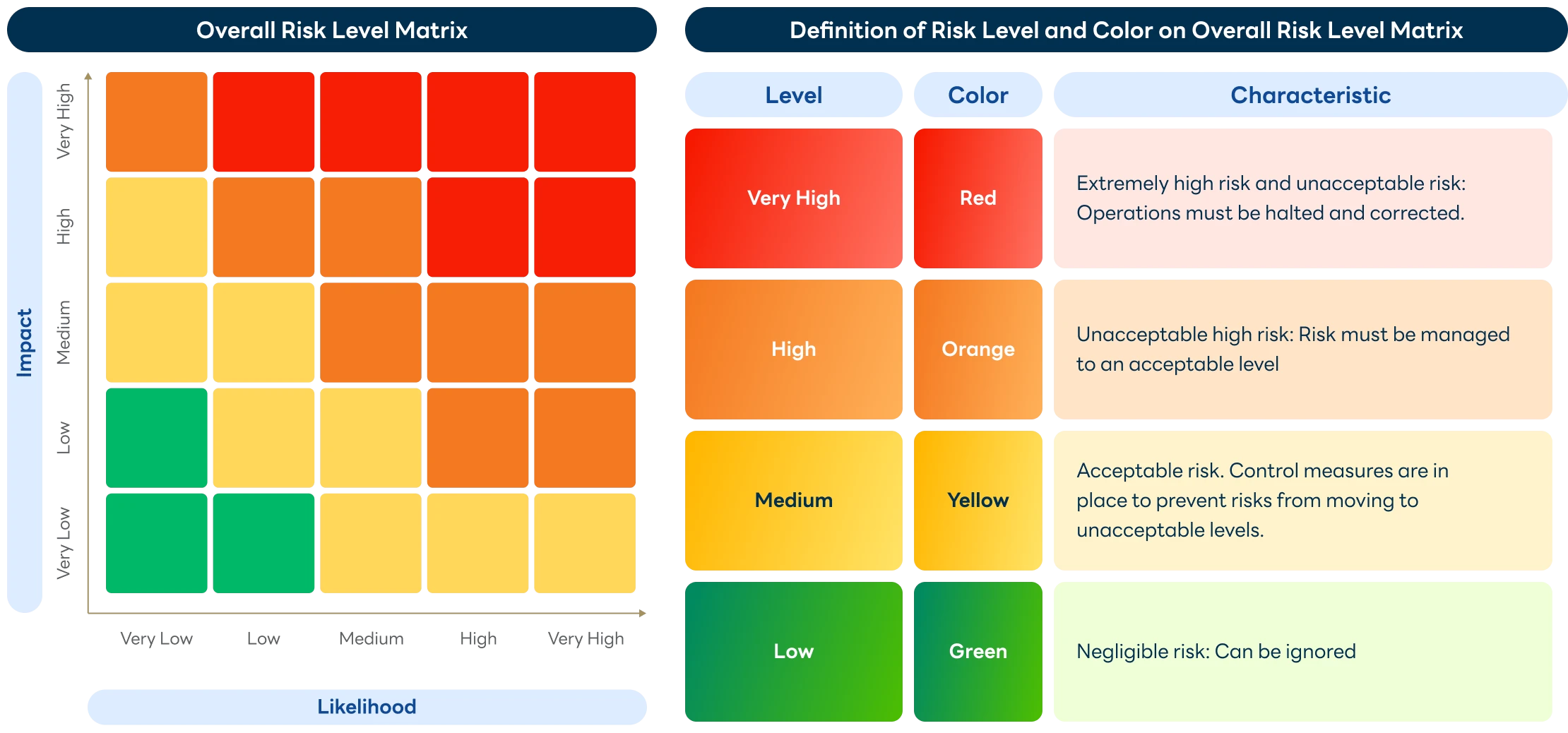
If a supplier is assessed to have a high level of risk, BEM will collaborate with the supplier to develop appropriate corrective action plans and risk mitigation measures. The Company will also conduct continuous follow-up assessments to ensure that such risks are eliminated or reduced to an acceptable level without any disruption to the supplier's delivery of products or services.
2025 Supplier Assessment

New suppliers assessed through self-assessment

Non-Significant Tier-1 Suppliers assessed through self-assessment

Significant Tier-1 Suppliers assessed through on-site assessment

Significant Tier-1 Suppliers assessed for sustainability risks

Suppliers that not the assessment

Suppliers whose contracts were terminated or removed from the Approved Vendor List (AVL)
Supplier Evaluation
BEM conducts supplier evaluations to reflect supplier performance efficiency, product and service quality, and delivery punctuality. Sustainability aspects are also integrated into the supplier scoring system. These cover topics such as the treatment of contractor employees, compliance with environmental agreements and/or the Company's regulations, responsiveness to the Company's needs, and the resolution of issues and complaints after delivery of goods and services.
For contracted jobs or services requiring on-site work within the Company's premises, performance is evaluated across different operational phases: pre-work preparation, during operations, and post-work evaluation. These evaluations are conducted jointly by the requesting department and the procurement department. Accordingly, the Company defines supplier performance levels based on the following criteria:
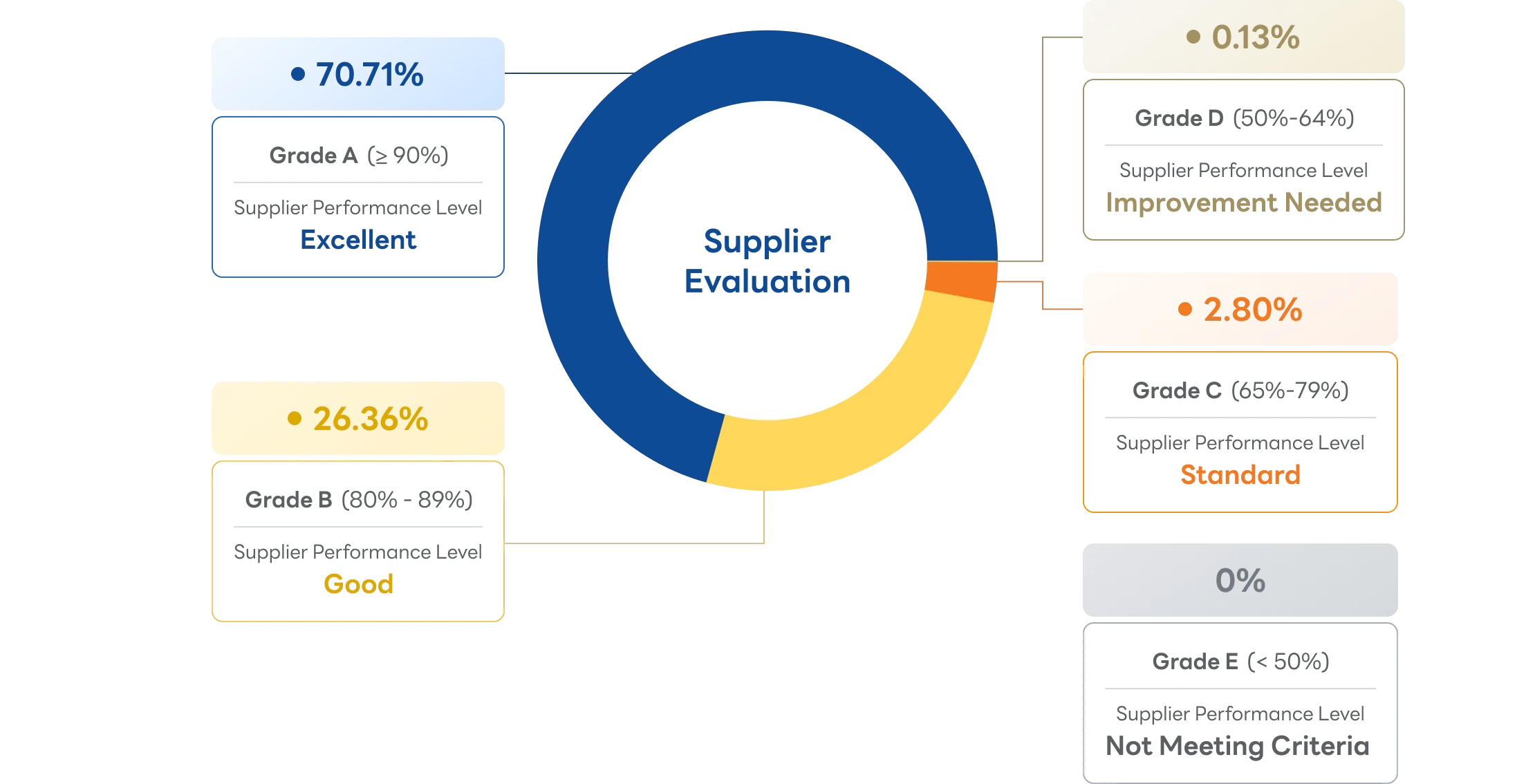
For suppliers that receive operational complaints or evaluation results below the 50% threshold, BEM will conduct a thorough fact-finding investigation and then discuss with the supplier to develop a Corrective Action Plan with a clear execution timeframe, established mutually by the Company and the supplier.
BEM has established a phased escalation process based on the severity of the issues identified. These measures range from requesting cooperation, holding joint meetings with the supervising department, requiring the supplier to implement a corrective action plan, issuing formal service improvement notices, suspending work assignments, and ultimately removing the supplier from the Approved Vendor List (AVL) if the complaints or deficiencies cannot be resolved within the specified timeframe.
The 2025 supplier evaluation results showed that no suppliers received an average score below the passing threshold (below 50%). However, one supplier received an average score below the standard benchmark. In response, BEM enforced the designated phased measures, requiring the supplier to implement a corrective action plan followed by periodic monitoring. If the evaluation result continues to fall below the standard benchmark, the Company will consider suspending work assignments and initiating contract termination procedures accordingly.
Supplier Development
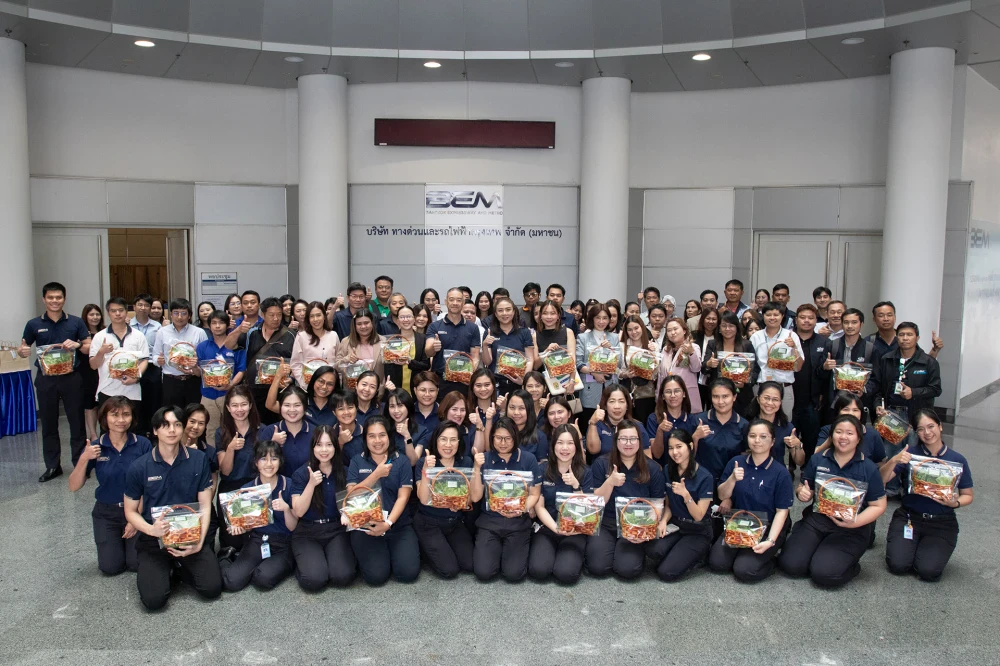
BEM continuously drives supplier capacity building through various training programs. This includes educating contractors who work within the rail system to ensure compliance with relevant rules and regulations, thereby guaranteeing workplace safety. Furthermore, the Company hosts meetings and workshops to enhance knowledge and understanding of corporate policies, particularly the Company's anti-corruption policy and the sustainable development principle, thereby strengthening supplier capabilities.
BEM provides ongoing ESG-related communication materials to educate suppliers and implements initiatives such as the Contractor Scorecard to promote engagement, raise awareness, and incentivize supplier development. These efforts contribute to the safety of employees, contractors, and customers, while strengthening sustainability across the Company's entire supply chain.
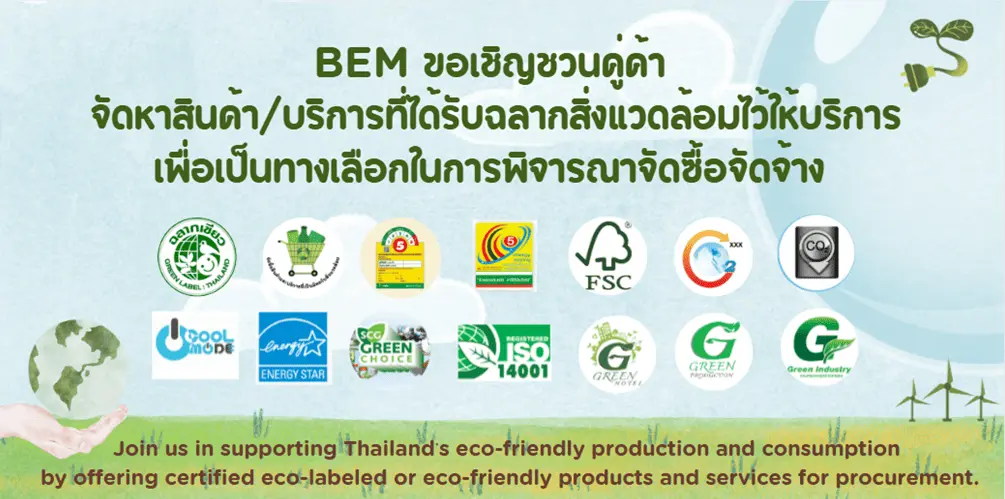
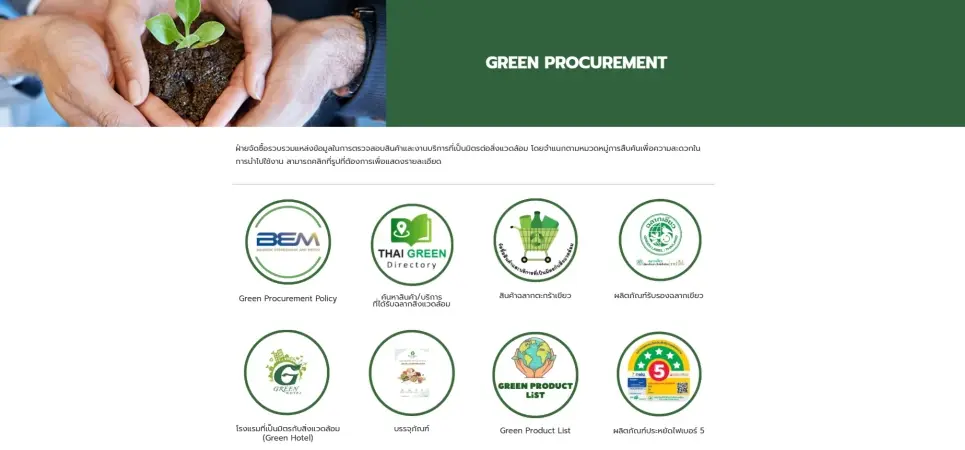
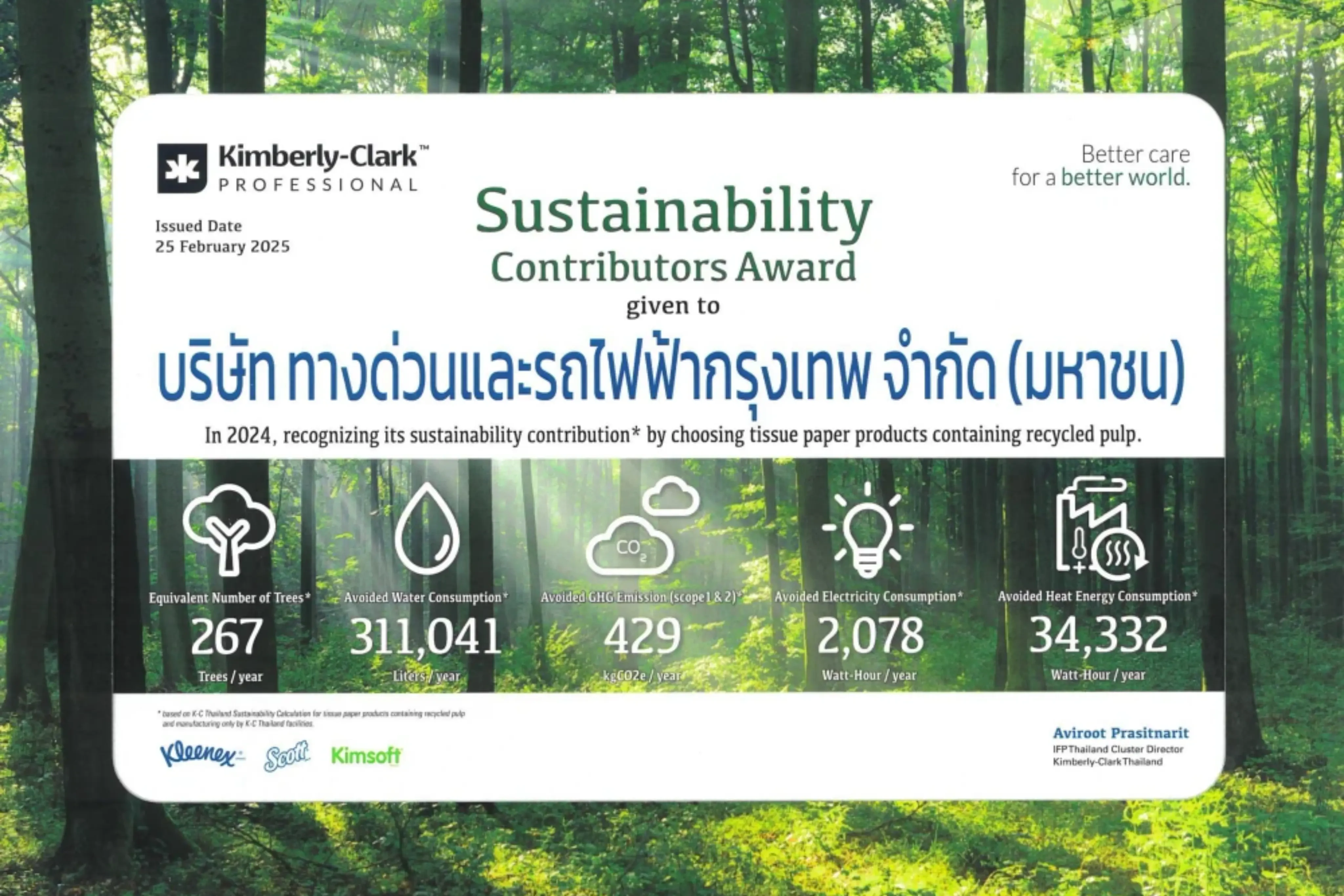
Additionally, BEM has actively participated in environmental conservation by sourcing materials that help protect the environment. This includes choosing FSC (Forest Stewardship Council) certified tissue paper, which is made from recycled fibers and produced through environmentally sustainable processes.
This initiative also supports the operations of suppliers who share the same commitment to environmental conservation. As a result of these efforts, the Company was awarded the Sustainable Forest Contributors Award by Kimberly-Clark Thailand, presented through its product distributors, as recognition of its commitment to sustainable, for the second consecutive year. This award serves as a testament to the Company’s steadfast commitment to operating in accordance with sustainable development principles.
Whistleblowing and Complaint Channels
BEM recognizes and emphasizes the importance of an Anti-Corruption Policy. This involves implementing measures to prevent corruption both internally and externally, and establishing guidelines and procedures for tracking and surveillance, guidelines for reviewing risk assessments, etc. All directors, executives, and employees of the Company are required to strictly observe and adhere to these measures to ensure transparent and ethical business operations. BEM adheres to social responsibility towards stakeholders based on the principles of good corporate governance and business ethics, as well as anti-corruption commitment.
BEM would like to be a part of communications or public relations campaign to collaborate on solving corruption issues by inviting all suppliers to join as partner in Thai Private Sector Collective Action Against Corruption (CAC). If your company is interested to join the network, please find more details at www.thai-cac.com
Any suppliers or related parties who have any questions or observe any suspicious actions that may violate or breach the laws, rules, regulations, codes of conduct or policies of BEM, are welcome to contact us. You can inquire, report clues or make complaints, along with supporting details and evidence, through the channels as follows: